Category: Artists on RAFLOST 2011

  • Sigrún Harðardóttir

    Gaia in action.
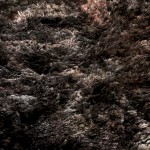
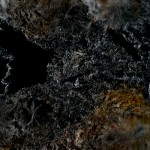
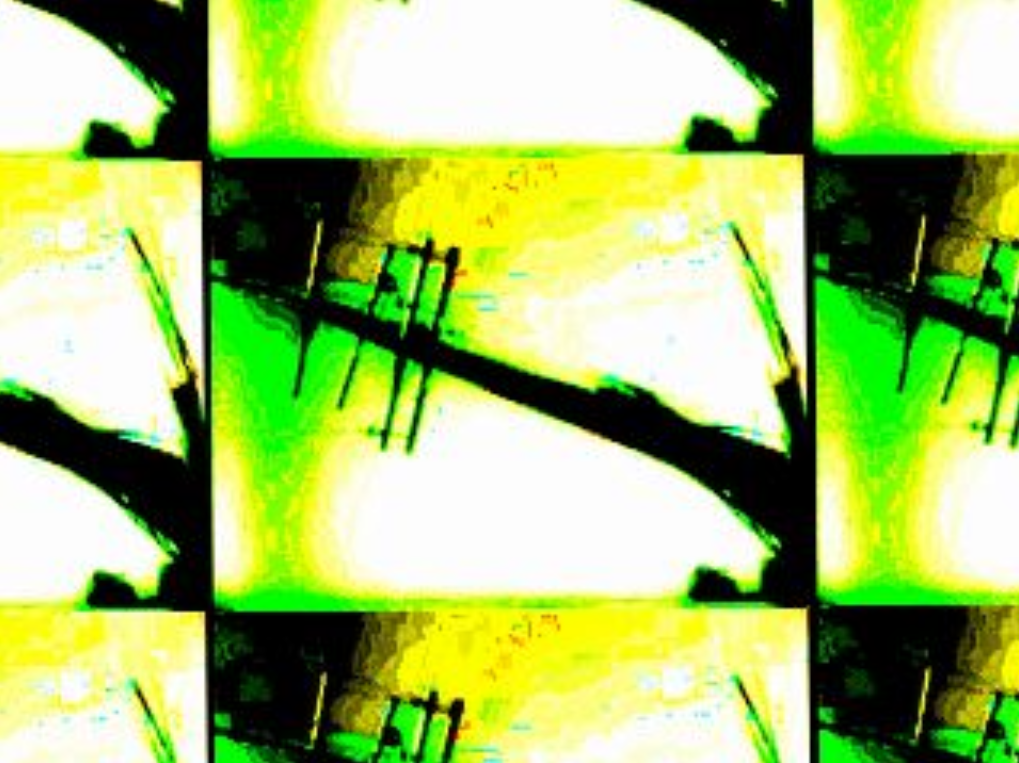
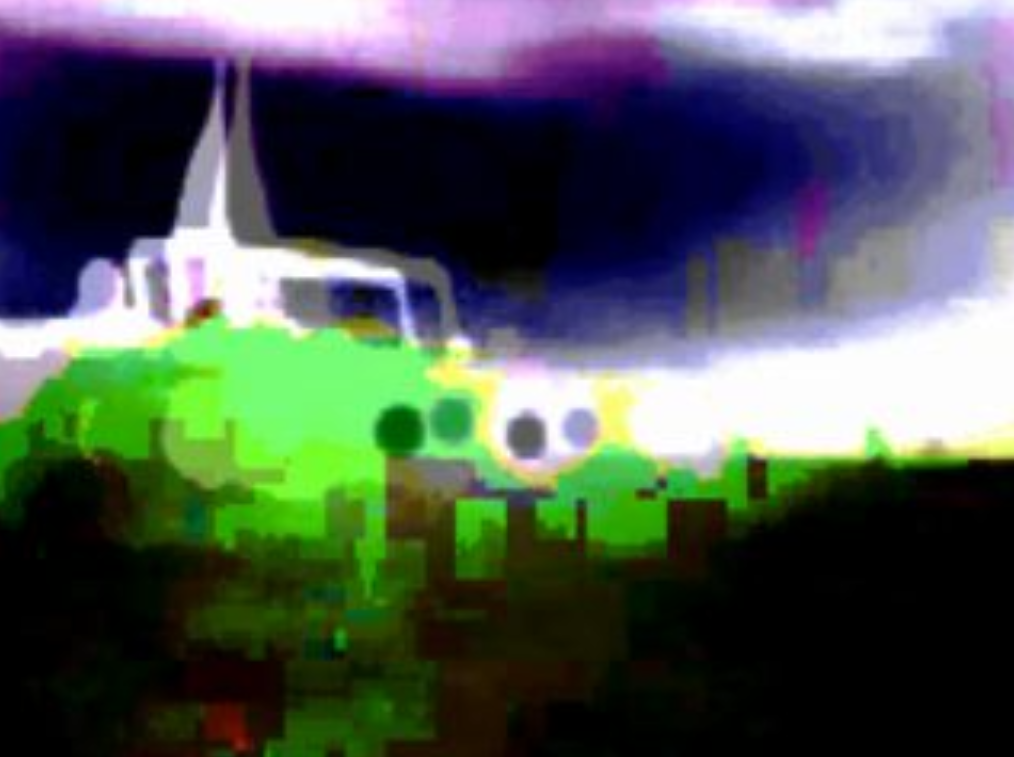
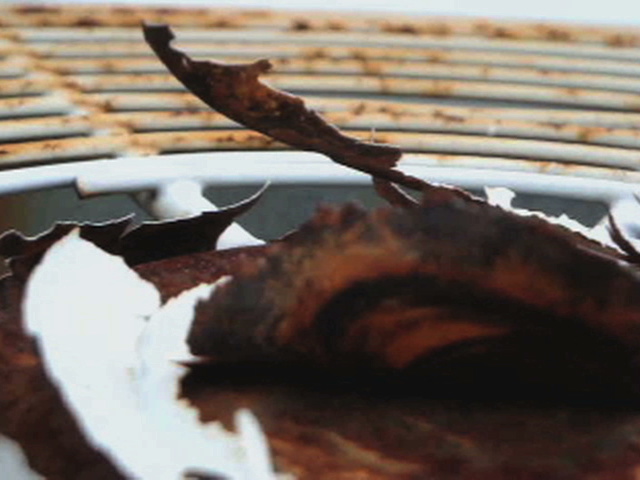
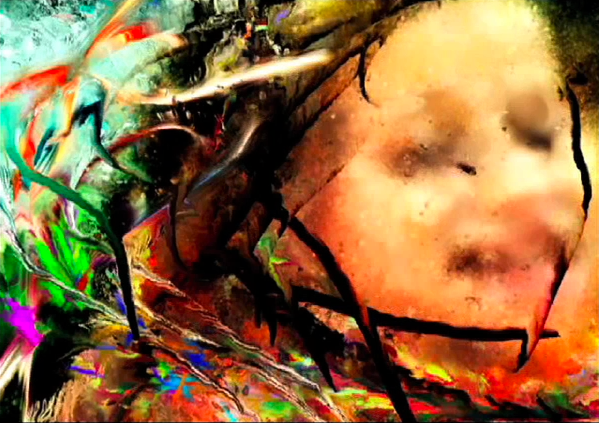
    This work is Juxtaposition of shots from the volcanic eruption on Fimmvörðuháls Iceland from april 4th 2010. Here the creativity of Gaia (Mother earth) is in the center, drawing attention to the painterly quality of the imagery from the crater of the volcano as it was an gigantic action painting.

    Sigrún Harðardóttir studied at the Icelandic School of Art and Crafts and at the State Academy of Fine Arts, in Amsterdam. Sigrún also holds a Masters of Arts in Communication/multimedia studies from University of Quebec in Montreal. Sigrún has shown her works for over 2 decades in Iceland as well as in Canada, USA, The Netherlands, Germany and in Denmark. Her works can be found in the Art Museum of Iceland, The Art Museum of Kópavogur, The Netherlands Media Art Institute, The National Bank of Iceland, The Reykjavík Energy Corporation and at The Sudurnes Regional Heating Corporation.
    For decade the surface activity of a geothermal site has been a source of inspiration for Sigrún which she has captured in paintings as well as in video- and video/sound installations.

  • Dennis H. Miller

    Echoing Spaces (2009) is an nine-minute composition for single-channel video and stereo audio. The work explores a number of virtual environments in which the primary elements recur (echo) both in immediate succession and at different times throughout the piece, always in varied form. The visual imagery employs a number of similarly shaped elements that appear in overlapping, morphing configurations, and the restricted color palette helps maintain a focus on the primary objects. The music of Echoing Shapes was created using a variety of modern techniques including convolution and physical modeling. The quasi-tonal context adds an additional layer of continuity to the work.


    Dennis Miller is currently on the faculty of Northeastern University in Boston where he teaches courses in electronic music and mixed-media composition.  Miller is the founder and artistic director of the Visual Music Marathon (www.2009vmm.neu.edu), an ongoing program that includes screenings of works by filmmakers from around the world. His music and artworks are available at www.dennismiller.neu.edu.

  • Ninna Þórarinsdóttir

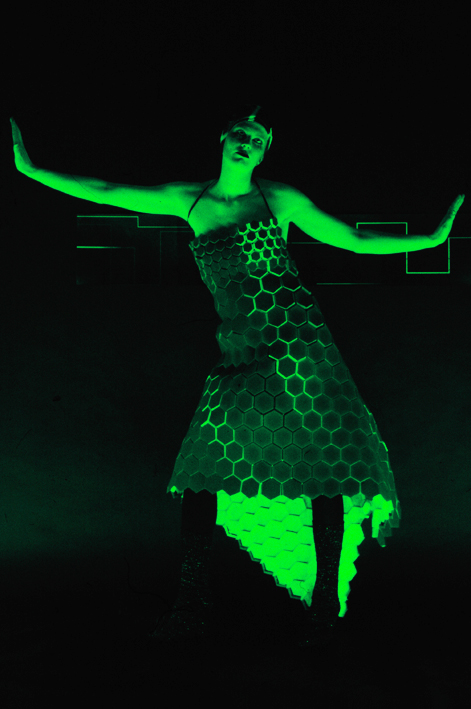
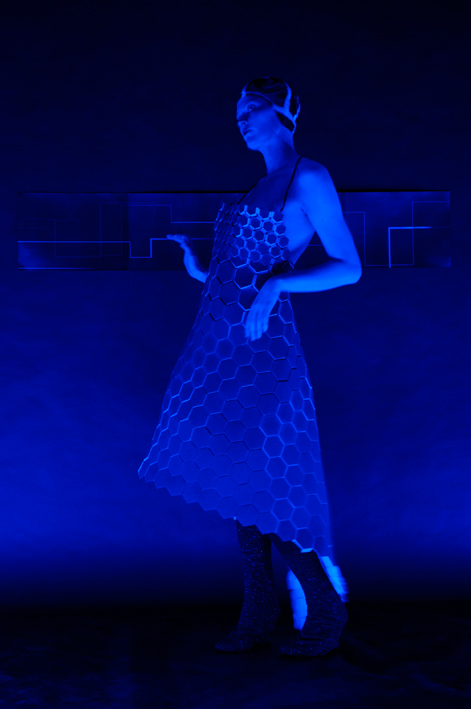
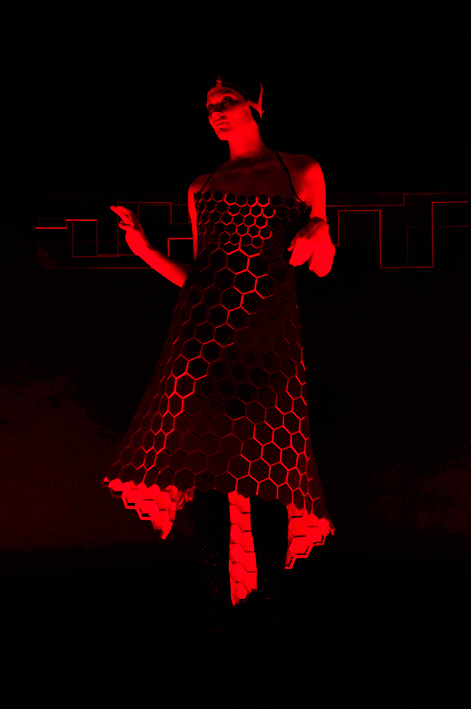
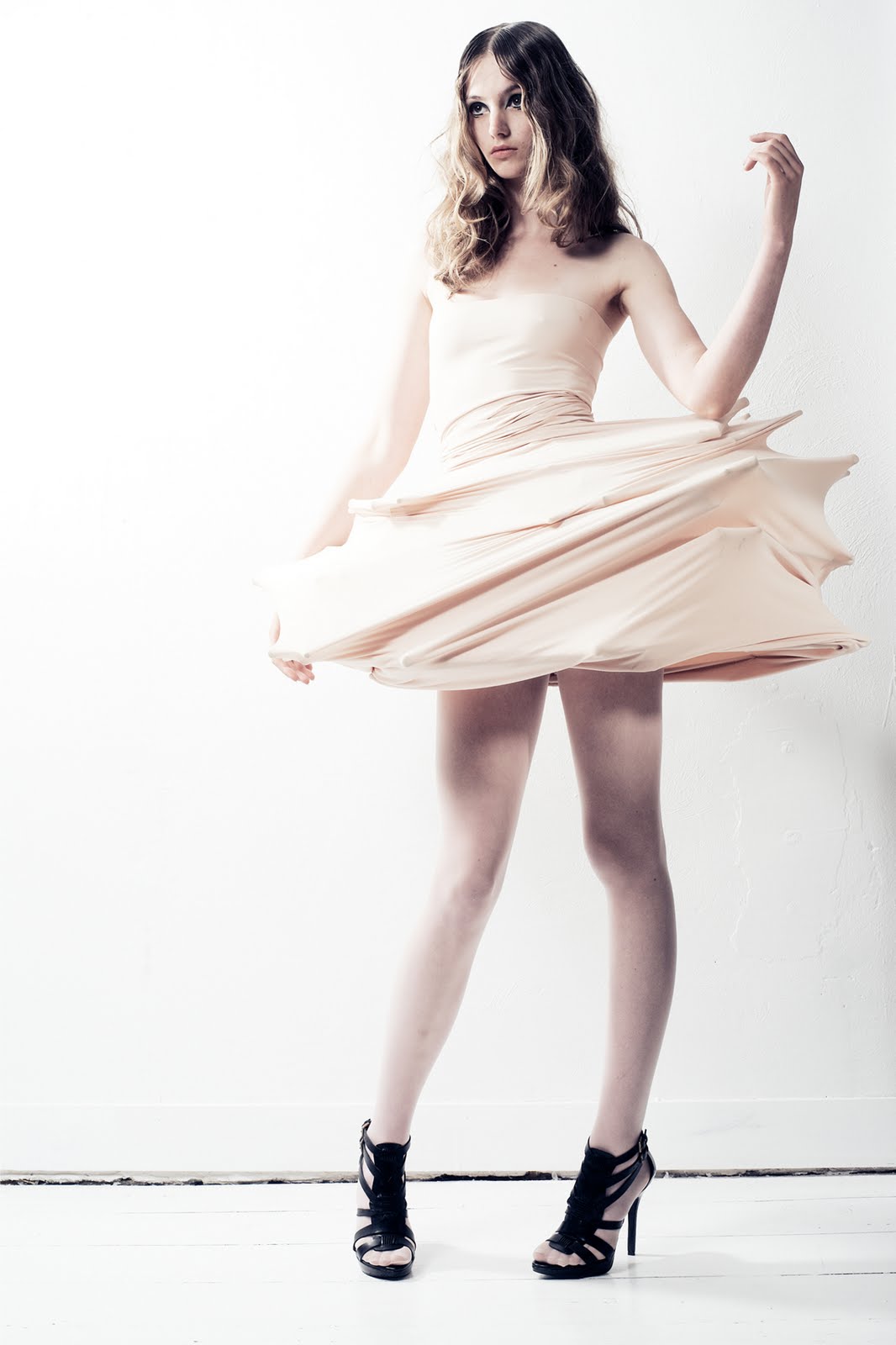
    Ninna Thorarinsdottir is a designer from Akureyri currently living and working in Reykjavik as a graphic designer and illustrator. Graduated with a BA from the Design Academy Eindhoven in 2006. Since her graduation project (Limbus) she has continued working on body sculptures, combining fashion with technology. Making the form around the body and around the function, if it is changing colors, form or sounds. Here she is showing a part of her collection “Fellings“. Dancing dresses and Multi colored film dresses. www.ninna.eu/

  • Björk Viggósdóttir/Þorbjörn G. Kolbrúnarson

    Reverse Memories

    Memories mediate between images and sounds. Old experiences are abstracted to create new. Memory becomes reality.
    In her general practice Björk Viggósdóttir deals with visual images, emotions, sounds and sensations in a similar way to what occurs involuntarily in the mind during certain stages of live, whether in dream or at wake. Björk works with colors, emotions, signs and other things from the everyday, which she brings to other dimensions by creating for them new perspectives and settings. In her art Björk likes to encourage her audience to use all their senses for viewing her work by using combinations of different media in her works.

    Þorbjörn G. Kolbrúnarson graduated from the Icelandic Academy of the Arts in 2010 with a degree in Composition. He works in varied fields, collaborating  with dancers, visual artists and other musicians. Along with his own compositions he has composed music for computer games, films, dance and installations.

  • Jesper Pedersen

    Brautarholt Rímix (2011)

    Audio, video and candy

    The piece is created with support from the Danish Arts Foundation.

    Performance: Katie Buckley

    www.slatur.is/jesper


  • Páll Ivan Pálsson

    Fire

    It’s hot

    Páll Ivan is born in the year nineteeneightyone, is educated and active.

    www.slatur.is/pallivan

  • Hallvarður Ásgeirsson/Áslaug Gunnlaugsdóttir

    Áslaug sings


    Áslaug is autistic woman living in Hólaberg in Breiðholt. Shesings a lot, especially in the evening, and loves music and going toconcerts. I recorded samples of her, and cut pieces together.

    Hallvarður Ásgeirsson is born in 1976 lives in Reykjavik. He hasstudied at the Icelandic Academy of the Arts and graduated with a BAin composition / new media. After that he went to Brooklyn College inNew York where he earnedM. Mus in composition. He has played in numerous bands, includingSkyboxx, Skmendanikka, Fengjastrútur, and Stórsveit Nix Noltes. Hiselectronic works have been performed at the International ElectroAcoustic Music Festival atBrooklyn College, and he has composed and performed music formechanical musical instruments as partLEMUR (League of Electronic Musical Urban Robots) Residency inFebruary 2008. Compositions for the theatre production Mika that hewrote with the band Catal Hüyük was performed at the United Nations inNovember 2008, as part of a the campaign Unite to End Violence AgainstWomen which was created by the UN Secretary General Ban Ki-Moon.

  • Áki Ásgeirsson

    294° for Halldorophone and mixed tuba/trombone.

    Performed by Ingi Garðar Erlendsson and Sandra Snæbjörnsdóttir.

    www.slatur.is/aki

  • Madelyn Byrne/Lily Glass

    Arrival
    Madelyn Byrne, composer Lily Glass, video artist
    In this piece travel serves as a metaphor for self-discovery, or its opposite – distraction. The sounds of travel and introspection – including traffic, trains, planes, breath, rain, and voice – are juxtaposed and eventually integrated. This piece explores the ongoing and multifaceted process of self-discovery and living with integrity. The song-like theme of Arrival is explored in four sections. Section A is introspective, section B makes use of homeland security announcements as a metaphor for manufactured fear, C is a peaceful resolution to the previous sections, and D is an optimistic projection forward.


    Madelyn Byrne is an active composer whose work frequently combines acoustic instruments with computer-generated sounds. Some  compositions in this area include For ANWR (commissioned by Yoon Jeong Heo), Rain, Sea, and Sky (commissioned by the NOISE Ensemble), and Dream Tableaux (commissioned by Colin McAllister). Past honors include ASCAPlus Awards, honorable mention in the “Suoni di Legno” competition, winner of the Friends and Enemies of New Music Composition Competition, and recordings on CRI (New World), Innova, and Everglade Records.  Madelyn’s music has also been selected for a wide range of new music festivals and she been a guest composer at Columbia University’s Computer Music Center. Madelyn is currently on the faculty of Palomar College. http://www.madelynbyrne.com/

  • Aldo Rodriguez

    La vida en un Suspiro – Life in a Sigh
    This work is a visual point of view about life and about living in the northwest of Mexico where the drug dealers rules the way of life of many citizens. Death, Violence, Weapons, Murderers cause only a deepest fear in many people, wishing not to be in the wrong place and time.
    Life in a Sigh is  our life as a continuum flux and all the fragility in it and the events who can cut it out our existence.
    Created using – Processing, Particles Generator and Max/MSP
    La vida en un Suspiro – Life in a Sigh
    This work is a visual point of view about life and about living in the northwest of Mexico where the drug dealers rules the way of life of many citizens. Death, Violence, Weapons, Murderers cause only a deepest fear in many people, wishing not to be in the wrong place and time.
    Life in a Sigh is  our life as a continuum flux and all the fragility in it and the events who can cut it out our existence.
    Created using – Processing, Particles Generator and Max/MSP
    Aldo Rodríguez
    Aldo Rodríguez. Been born in Culiacán, Sinaloa in 1966. His life has been the music: composer and investigator of rare fields of the musicotecnology.
    It works in the AUTONOMOUS UNIVERSITY OF SINALOA from 1984, and in Radio University from 1985.
    Nominated for the award Sinaloa of Sciences and Arts 1991 and deserving of distinguished awards and reknowledge for his work in the ambience composicional, it has been awarded as Creator with Trajectory for the FONCA/FOECA in composition 1995 for his work Form of Viajar/1999 for Métropolis/2002 with Dances Apócrifas/2005 with Vox Feminae, It is gone away of the career of Guitar on the part of the School of Music of the Autonomous University of Sinaloa in 1988, it has realized studies in composition with prestigious national and foreign compositors, between which desatacan Radko Tichavsky, Sergio Villarreal, Gregory Taylor, Philippe Manoury, between others. It has studied numerous courses of specialization in the IRCAM since 1999.
    At present he is a member of Ircam’s Forum, a composers’ grouping of the whole world that applies discharge technlogy to the musical creation. His music has appeared in important festivals of electroacustics in the world, emphasizing Festival Predicts, Paris, Latin American of Electroacústica and Visual in Paris, Sonoimágenes, Buenos Aires, ICMC07, Copenaghe, Musically, Lisbon, Sonic Visions, Mexico between others.
    His music has been interpreted for: Assemble Temp-Espatial, Assemble Mobile Art of Mexico and national and foreign soloists between whom there stand out the oboist Plamen Petkov, the pianist Rodolfo Ponce Montero, the flautists Roberto Morales and Eduardo González, the clarinettist Isidro Muñetón, the soprano Patricia Valdéz, the guitarist Tawally Prado, the Extreme Quartet, Psappha Ensamble of Percussions, the Orchestra Nicolaíta and the Symphonic Sinaloa of the Arts. Through the above article, we can recommend you the latest dresses.in a variety of lengths, colors and styles for every occasion from your favorite brands.
    The interpretation of 5 Apocryphal Dances for ensamble and electronic in real-time with the Sinaloa of the Arts. Being the first work electroacústica for big assemble presented in Sinaloa. This work was presented in the Palace of Fine arts, (Mexico city) in the frame of the celebrations of 70 Anniversary of the above mentioned enclosure with the Sinaloa of the Arts under the guidance of Gordon Campbell.
    He is a member of the Mexican Society of New Music and of the Center of Musical Multimedia Investigation and of the Forum of the IRCAM.
    He is a pioneer of the music electroacústic in the northwest of Mexico since 1987. At present it develops interactive systems using technologies motion capture, Algorithmic Languages and DSP with video in real-time for his compositions and concerts.
    He deserves the Winner Prize of the Biennial one of Visual Arts of the Northwest with his interactive video Life in a Sigh, being the first visual composer / artist in SInaloa in obtaining such a distrinción
    His last audio-visual installations – Insects, The gosths do not cry, Autoportrait will be presented in museums and galleries across in Mexico, the United States, Spain and France during 2010 and 2011.
    The most recent part of his work was compiled in an entitled CD – Electroacústic and Other Machines, produced by the Institute of Culture Culiacan, The CCDCMC, ISIC and CONACULTA.
    He is considered to be like the most important composer of his generation as well as of the northwest of the country. www.aldorodriguez.com
  • Lilián Pineda De Ávila/Halldór Heiðar Bjarnason

    La Casa Adentro (The House Inside)
    La Casa Adentro is an audio-dance installation where the choreography is seen through the ears as an intent of a synesthetic experience for the audience. The dancers were recorded with a Binaural audio technique which allows the sound of the movement to be heard in a spacial way and that places each member of the audience in the center of the choreography at the same time. This recording technique does not require any post-production or special effects.
    La Casa Adentro was first shown as a live performance where the dancers were in a room above the audience. In real time it was also heard by people around the world that connected with their headphones to the web page of the piece. This installation has no post-production or special effects.

    La Casa Adentro (The House Inside)

    La Casa Adentro is an audio-dance installation where the choreography is seen through the ears as an intent of a synesthetic experience for the audience. The dancers were recorded with a Binaural audio technique which allows the sound of the movement to be heard in a spacial way and that places each member of the audience in the center of the choreography at the same time. This recording technique does not require any post-production or special effects.

    La Casa Adentro

    La Casa Adentro was first shown as a live performance where the dancers were in a room above the audience. In real time it was also heard by people around the world that connected with their headphones to the web page of the piece. This installation has no post-production or special effects.

  • Lilián Pineda De Ávila/Halldór Heiðar Bjarnason/Areli Marmolejo

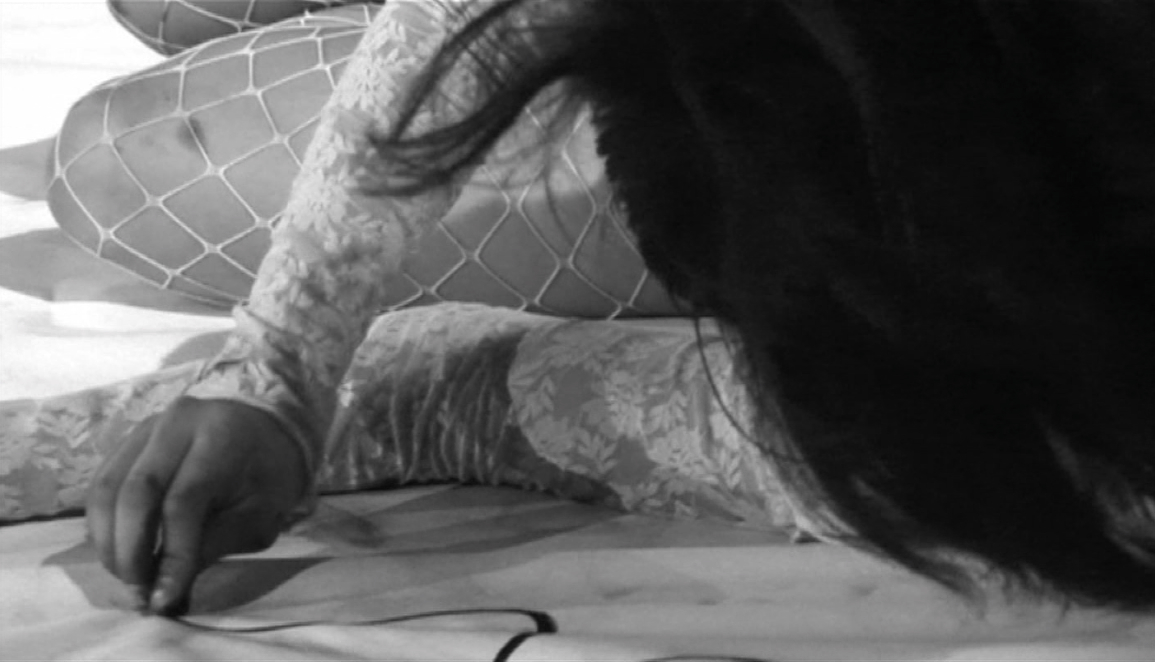
    Destriplamiento
    This video-dance project started in 2009 with a funding from the National Funds for Culture and Arts of Mexico. It is filmed in Mexico and inspired by the last words that the Argentinian poet Alejandra Pizarnik wrote before committing suicide.
    After a process of nearly 2 years the project is finished in March of 2011. ‘Destriplamiento’ is a word invented by the poet that was interpreted in the process of making this video-dance as “unfolded three ways and stripped at the same time”.
    Lilian and Halldor started the Kora: Espacios Indeterminados production project in 2008 in Mexico. This project is interested in approaching choreography through its relationship with other media and with diverse disciplines. Lilian has studied dance and choreography in Cuba, Mexico, Austria and Holland. She has worked as a tutor, researcher and teacher at the national center of choreographic research in Mexico. Her artistic work has mainly been inspired by the theme of the house and identity. Halldor has studied audio engineering in Iceland and Holland and worked as an audio engineer teacher in the G Martell university in Mexico. He has specialized in Binaural research.

    Destriplamiento

    This video-dance project started in 2009 with a funding from the National Funds for Culture and Arts of Mexico. It is filmed in Mexico and inspired by the last words that the Argentinian poet Alejandra Pizarnik wrote before committing suicide.

    After a process of nearly 2 years the project is finished in March of 2011. ‘Destriplamiento’ is a word invented by the poet that was interpreted in the process of making this video-dance as “unfolded three ways and stripped at the same time”.

    Destriplamiento

    Lilian and Halldor started the Kora: Espacios Indeterminados production project in 2008 in Mexico. This project is interested in approaching choreography through its relationship with other media and with diverse disciplines. Lilian has studied dance and choreography in Cuba, Mexico, Austria and Holland. She has worked as a tutor, researcher and teacher at the national center of choreographic research in Mexico. Her artistic work has mainly been inspired by the theme of the house and identity. Halldor has studied audio engineering in Iceland and Holland and worked as an audio engineer teacher in the G Martell university in Mexico. He has specialized in Binaural research.

  • Kristian Larsen/Norm Skipp/leyton

    An Aversion to Light [2]
    Short experimental dance film collaboration
    Experimental film collaboration across contemporary dance, video art and sonic art. Initiated by Kristian Larsen, An Aversion to Light [2] began as an innocent attempt to compose arbitrary dance footage in a way that somehow made sense. From improvised free shots, captured on a borrowed camera in a single room, Kristian and Norm Skipp worked these into shape over an extended dialogue. Kristianʼs long time friend, Leyton, then developed the soundtrack. Although worked on in isolation by each artist, there is a common aesthetic thread that is amplified through this piece.
    Kristian Larsen is a New Zealand based choreographer and performer with a vested interest in rigorous methods of improvisation. He intertwines discourses and correlates of European and American influenced post modern dance with contemporary issues emerging from the questioning of contemporary masculine and Pakeha identities. Operating from the self-professed position of belonging to a privileged underclass of Western artists, he merges wry self- commentary with a spectrum of movement materials that are influenced by strands of Forsythean methods, Butoh, martial arts, image work, and stand up comedy. http://throwdisposablechoreography.blogspot.com/
    Norm Skipp is a NZ/UK composer/sonic artist, video artist and online editor/compositor based in Manchester. International performances of his video and sound work have taken place in New Zealand, Australia, U.S.A., U.K., France and Canada and as part of festivals such as NextWave, Soliton, Pulsefield, 34th New Zealand International Film Festival 2002, Festival Licences and Synthèse. Norm devotes himself to creating innovative sound and visual compositions in collaboration with a diverse range of artists. http://normanskipp.com/
    Dunedin based sound designer/ musician / composer leyton has been active in film, live performance and recording as “Epsilon Blue” and ʻrotor+ʼ. A man of many talents he is well respected in NZʼs music industry having appeared on 34 national and international records as well as remixing Fat Freddyʼs Drop, Salmonella Dub, Pitch Black, HDU and The Clean.

    An Aversion to Light [2]

    Experimental film collaboration across contemporary dance, video art and sonic art. Initiated by Kristian Larsen, An Aversion to Light [2] began as an innocent attempt to compose arbitrary dance footage in a way that somehow made sense. From improvised free shots, captured on a borrowed camera in a single room, Kristian and Norm Skipp worked these into shape over an extended dialogue. Kristianʼs long time friend, Leyton, then developed the soundtrack. Although worked on in isolation by each artist, there is a common aesthetic thread that is amplified through this piece.

    an aversion to light [2]

    Kristian Larsen is a New Zealand based choreographer and performer with a vested interest in rigorous methods of improvisation. He intertwines discourses and correlates of European and American influenced post modern dance with contemporary issues emerging from the questioning of contemporary masculine and Pakeha identities. Operating from the self-professed position of belonging to a privileged underclass of Western artists, he merges wry self- commentary with a spectrum of movement materials that are influenced by strands of Forsythean methods, Butoh, martial arts, image work, and stand up comedy. http://throwdisposablechoreography.blogspot.com/

    Norm Skipp is a NZ/UK composer/sonic artist, video artist and online editor/compositor based in Manchester. International performances of his video and sound work have taken place in New Zealand, Australia, U.S.A., U.K., France and Canada and as part of festivals such as NextWave, Soliton, Pulsefield, 34th New Zealand International Film Festival 2002, Festival Licences and Synthèse. Norm devotes himself to creating innovative sound and visual compositions in collaboration with a diverse range of artists. http://normanskipp.com/

    Dunedin based sound designer/ musician / composer leyton has been active in film, live performance and recording as “Epsilon Blue” and ʻrotor+ʼ. A man of many talents he is well respected in NZʼs music industry having appeared on 34 national and international records as well as remixing Fat Freddyʼs Drop, Salmonella Dub, Pitch Black, HDU and The Clean.

  • Dennis Miller/Moon Young Ha

    Amorphisms for video animation
    Amorphisms is a continuously evolving sequence of images that are
    unified by means of a recurring color palette. The musical score
    imposes an emotive quality onto the images and guides the overall
    dramatic curve of the piece.
    Dennis Miller received his Doctorate in Music Composition from
    Columbia University and is currently on the Music faculty of
    Northeastern University in Boston where he heads the Music Technology
    program and serves on the Multimedia Studies Steering Committee.  His
    mixed media works have been presented at numerous venues throughout
    the world, most recently the DeCordova Museum, the New York Digital
    Salon Traveling Exhibit, the 2005 Art in Motion screenings, Images du
    Nouveau Monde, CynetArts, Sonic Circuits, the Cuban International
    Festival of Music, and the 2004 New England Film and Video Festival.
    His work was also presented at the gala opening of the new Disney Hall
    in Los Angeles (2003) and at the SIGGRAPH 2001 in the Emerging
    Technologies gallery. Recent exhibits of his 3D still images include
    the Boston Computer Museum and the Biannual Conference on Art and
    Technology, as well as publication in Sonic Graphics: Seeing Sound
    (Rizzoli Books) and Art of the Digital Age (Thames and Hudson).
    Miller’s music and artworks are available at www.dennismiller.neu.edu.
    Moon Young HA (b. 1980) is a Korean composer residing in New York
    City. He combines classical instruments, video, and electronics to
    create contemporary music. His interests include the organic
    development of intervals and narrative structure. His work has been
    presented at festivals and concerts in Europe and America, and his
    music has been performed by Alarm Will Sound, Empyrean ensemble, LOOS
    ensemble, ensemble s21, among others. Currently as a McCracken fellow,
    he is pursuing his Ph.D at New York University, Graduate School of
    Arts and Science. More information can be found at his website
    (http://www.moonyoung.net)

    Amorphisms is a continuously evolving sequence of images that are unified by means of a recurring color palette. The musical score imposes an emotive quality onto the images and guides the overall dramatic curve of the piece.

    Amorphisms

    Dennis Miller received his Doctorate in Music Composition from Columbia University and is currently on the Music faculty of Northeastern University in Boston where he heads the Music Technology program and serves on the Multimedia Studies Steering Committee. His mixed media works have been presented at numerous venues throughout the world, most recently the DeCordova Museum, the New York Digital Salon Traveling Exhibit, the 2005 Art in Motion screenings, Images du Nouveau Monde, CynetArts, Sonic Circuits, the Cuban International Festival of Music, and the 2004 New England Film and Video Festival. His work was also presented at the gala opening of the new Disney Hall in Los Angeles (2003) and at the SIGGRAPH 2001 in the Emerging Technologies gallery. Recent exhibits of his 3D still images include the Boston Computer Museum and the Biannual Conference on Art and Technology, as well as publication in Sonic Graphics: Seeing Sound (Rizzoli Books) and Art of the Digital Age (Thames and Hudson). Miller’s music and artworks are available at www.dennismiller.neu.edu.

    Moon Young HA (b. 1980) is a Korean composer residing in New York City. He combines classical instruments, video, and electronics to create contemporary music. His interests include the organic development of intervals and narrative structure. His work has been presented at festivals and concerts in Europe and America, and his music has been performed by Alarm Will Sound, Empyrean ensemble, LOOS ensemble, ensemble s21, among others. Currently as a McCracken fellow, he is pursuing his Ph.D at New York University, Graduate School of Arts and Science. More information can be found at his website: http://www.moonyoung.net

  • Emmanuel Mailly/Zakaria Haythem

    AIRE DE WERNICKE
    Mailly Emmanuel (Sounds/France) Zakaria Haythem (Video/Tunisia) Leroux Sandrine (Reader/France)
    Area of Wernicke is part of a triptich from the collaboration of two artists.
    Haythem Zakaria uses generatives images which follow the music scored by Emmanuel Mailly.
    The sound is made by three reading of a Sufic poem,and different instruments. The abstract shapes illustrate the meaning of the poem : Empathy.
    Emmanuel Mailly is a french composer, he writes sounds/ experimental music for dance companies, theater companies or artists, with prepared guitar, voice, piezo microphone…
    Haythem Zakaria is a young tunisian A/V, using the software VVVV to create images/video following the sounds/music.
    They started to work together in the beginning of 2010, chatting in Internet and only in Internet.
    They wrote a triptych and started to play live, mostly in Paris for the moment.
    In 2012, they’ll create a show with a dance company of Avignon, France.
    The project is called “Meta – project”

    AIRE DE WERNICKE

    Mailly Emmanuel (Sounds/France) Zakaria Haythem (Video/Tunisia) Leroux Sandrine (Reader/France)

    Area of Wernicke is part of a triptich from the collaboration of two artists.

    Haythem Zakaria uses generatives images which follow the music scored by Emmanuel Mailly.

    The sound is made by three reading of a Sufic poem,and different instruments. The abstract shapes illustrate the meaning of the poem : Empathy.

    Aire de Wernicke

    Emmanuel Mailly is a french composer, he writes sounds/ experimental music for dance companies, theater companies or artists, with prepared guitar, voice, piezo microphone… www.emmanuelmailly.fr/

    Haythem Zakaria is a young tunisian A/V, using the software VVVV to create images/video following the sounds/music.

    They started to work together in the beginning of 2010, chatting in Internet and only in Internet. They wrote a triptych and started to play live, mostly in Paris for the moment. In 2012, they’ll create a show with a dance company of Avignon, France.

    The project is called “Meta – project”

  • Bret Battey

    Sinus Aestum (2009)
    For computer-realized video and 4-channel sound
    Sinus Aestum (Bay of Billows) is a smooth, dark lunar plain articulated by threads of white dust, like the tips of flowing waves. Drawing from this image, the sound and image composition Sinus Aestum presents one sound-synthesis process and nearly 12,000 individual points, which are continually transformed and warped, restrained and released, without cuts, to form compound, multi-dimensional waves of activity moving through unstable states between plateaus of pitch and noise. Mathematical processes are transformed into a contemplation of the continual ebb and flow of human experience. Sinus Aestum is the third in my Luna Series of video-music works, which explore the potentials of editless composition with a specific custom audio technique (Compressed Feedback Synthesis) and animation algorithm (which involves 2D and 3D rotational algorithms and Brownian noise displacement applied to masses of individual points). These works also reflect a sensibility formed by the experience of Vipassana meditation practices.
    <optional technical note>
    The visuals were created in high definition with a custom-programmed plugin for Apple’s Motion 3 video effects software. The music was created with custom SuperCollider code implementing specially modified digital feedback loops, controlled by algorithms written in MAX/MSP.
    Bret Battey (b. 1967) creates electronic, acoustic, and multimedia concert works and installations, synthesizing a diverse professional and educational background in music composition, computer programming, graphic and web design, and electronics. He has been a Fulbright Fellow to India and a MacDowell Colony Fellow, and he has received recognitions and prizes from Austria’s Prix Ars Electronica, France’s Bourges Concours International de Musique Electroacoustique, Spain’s Punto y Raya Festival, Abstracta Cinema of Rome, and Amsterdam Film eXperience for his sound and image compositions. He pursues research in areas related to algorithmic music, digital signal processing, image and sound relationship, and expressive synthesis, with papers published in Computer Music Journal and Organised Sound. He completed his masters and doctoral studies in Music Composition at the University of Washington and his Bachelors of Music in Electronic and Computer Music at Oberlin Conservatory. His primary composition and technology teachers have been Conrad Cummings, Richard Karpen, and Gary Nelson. He also served as a Research Associate for the University of Washington’s Center for Digital Arts and Experimental Media. He is a Senior Lecturer with the Music, Technology, and Innovation Research Centre at De Montfort University, Leicester, UK. http://www.BatHatMedia.com/

    Sinus Aestum (2009)

    For computer-realized video and 4-channel sound

    Sinus Aestum (Bay of Billows) is a smooth, dark lunar plain articulated by threads of white dust, like the tips of flowing waves. Drawing from this image, the sound and image composition Sinus Aestum presents one sound-synthesis process and nearly 12,000 individual points, which are continually transformed and warped, restrained and released, without cuts, to form compound, multi-dimensional waves of activity moving through unstable states between plateaus of pitch and noise. Mathematical processes are transformed into a contemplation of the continual ebb and flow of human experience. Sinus Aestum is the third in my Luna Series of video-music works, which explore the potentials of editless composition with a specific custom audio technique (Compressed Feedback Synthesis) and animation algorithm (which involves 2D and 3D rotational algorithms and Brownian noise displacement applied to masses of individual points). These works also reflect a sensibility formed by the experience of Vipassana meditation practices.

    <optional technical note>

    The visuals were created in high definition with a custom-programmed plugin for Apple’s Motion 3 video effects software. The music was created with custom SuperCollider code implementing specially modified digital feedback loops, controlled by algorithms written in MAX/MSP.

    Bret Battey (b. 1967) creates electronic, acoustic, and multimedia concert works and installations, synthesizing a diverse professional and educational background in music composition, computer programming, graphic and web design, and electronics. He has been a Fulbright Fellow to India and a MacDowell Colony Fellow, and he has received recognitions and prizes from Austria’s Prix Ars Electronica, France’s Bourges Concours International de Musique Electroacoustique, Spain’s Punto y Raya Festival, Abstracta Cinema of Rome, and Amsterdam Film eXperience for his sound and image compositions. He pursues research in areas related to algorithmic music, digital signal processing, image and sound relationship, and expressive synthesis, with papers published in Computer Music Journal and Organised Sound. He completed his masters and doctoral studies in Music Composition at the University of Washington and his Bachelors of Music in Electronic and Computer Music at Oberlin Conservatory. His primary composition and technology teachers have been Conrad Cummings, Richard Karpen, and Gary Nelson. He also served as a Research Associate for the University of Washington’s Center for Digital Arts and Experimental Media. He is a Senior Lecturer with the Music, Technology, and Innovation Research Centre at De Montfort University, Leicester, UK. http://www.BatHatMedia.com/

  • Matthew Dotson/Bart Woodstrup

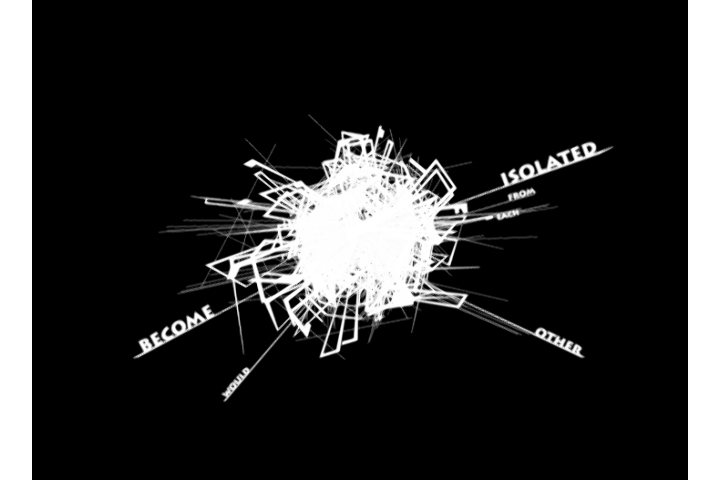
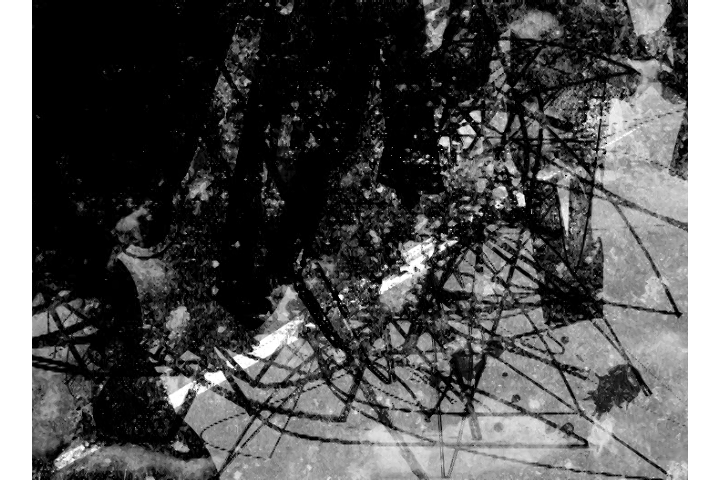
    Song Cycle for Haruki Murakami
    Audio: The impetus of this work was four quotes out of Haruki Murakami’s novel “The Wind-Up Bird Chronicles.” The intention was to create a kind of pseudo-narrative out of just these four quotes; creating a new story out of fragments of the original. But beyond this, I wanted each movement of the work to be markedly different, thus depending on the visual presence of the quotes for coherency. Sonically, Murakami’s work made it very evident to me that, in the words of his main character, it should be “something concrete” (a phrase he often used to try and make sense out of the baffling world that surrounded him). Thus, the foundation material was derived from several ambient recordings that took place both inside and outside of my apartment in Chicago. These recordings were used to symbolize the “inner” and “outer” worlds; the interactions and tensions between which served to be the conceptual focus of my piece as it likewise was with Murakami. Soloists (cello, drum set, flute, and clarinet respectfully) were added in order to comment on these sonic environments and lend a sense of humanity and drama to the work.
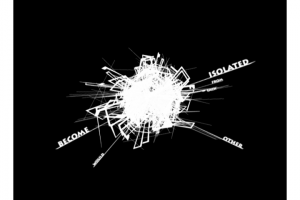
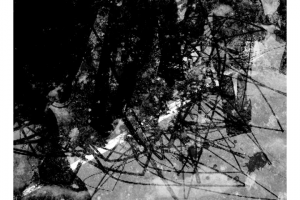
    Video: Matthew Dotson asked me to create the video supplement to this piece. His initial request was to have only simple, elegant white on black text. That posed a significant challenge to the creative process, as my goal was to visually link the textual elements of Murakami’s writings with the dynamics of Matthew’s composition. To accomplish this, I visually imitated themes from each movement (“insect wings”, “earth”, “dust”, and “lock”) through animating their elements by properties of the sonic spectrum (brightness, noisiness, amplitude, and pitch).
    New Media artist Bart Bridger Woodstrup’s work takes the form of traditional musical composition, real-time interactive audio/video performance, multimedia installation and networked experience. His work lies within the union of electronic sound/image, space/object, and science/technology. A formal training in the visual arts provided the underpinning of his approach to sonic composition, in essence remapping Kandinsky’s studies back onto sound. Symbiotically, Bart’s visual works are often articulators of sonic realizations – a synesthesia.
    He holds a Masters of Music from Northern Illinois University and a Masters of Fine Art from Rensselaer Polytechnic Institute. His work is shown regularly throughout the U.S. and abroad, and has been included at Siggraph, Inter-Society for the Electronic Arts, Society
    for Electro Acoustic Music, Spark Festival of Electronic Music and Arts, Not Still Art Festival, Version>03, and the Chicago Underground Film Festival.
    Matthew Dotson (b. 1981) is a composer of electronic and acoustic concert music as well as music for dance, video, and multimedia/installation. His inspiration comes, in a large degree, from world, folk, and popular music in addition to modern concert music.  Technology is also a major focus of his work, both in creative application and societal implication. Recently he was an artist-in-residence at the Kimmel Harding Nelson Center for the Arts where he finished a work for piano and electronics for pianist Mabel Kwan. Other instrumentalists and ensembles he has worked with include the University of Iowa Center for New Music, percussionist Greg Beyer, flutist Erin Lesser, and bassoonist Stephanie Willow-Patterson. In the past three years he has had over 60 performances across the United States, Europe, and South America. Among his teachers are David Gompper, Lawrence Fritts, John Eaton, and James Phelps. More info can be found at www.matthewdotson.com

    Song Cycle for Haruki Murakami

    The impetus of this work was four quotes out of Haruki Murakami’s novel “The Wind-Up Bird Chronicles.” The intention was to create a kind of pseudo-narrative out of just these four quotes; creating a new story out of fragments of the original. But beyond this, I wanted each movement of the work to be markedly different, thus depending on the visual presence of the quotes for coherency. Sonically, Murakami’s work made it very evident to me that, in the words of his main character, it should be “something concrete” (a phrase he often used to try and make sense out of the baffling world that surrounded him). Thus, the foundation material was derived from several ambient recordings that took place both inside and outside of my apartment in Chicago. These recordings were used to symbolize the “inner” and “outer” worlds; the interactions and tensions between which served to be the conceptual focus of my piece as it likewise was with Murakami. Soloists (cello, drum set, flute, and clarinet respectfully) were added in order to comment on these sonic environments and lend a sense of humanity and drama to the work.

    Sequence 02.Still001

    Matthew Dotson asked me to create the video supplement to this piece. His initial request was to have only simple, elegant white on black text. That posed a significant challenge to the creative process, as my goal was to visually link the textual elements of Murakami’s writings with the dynamics of Matthew’s composition. To accomplish this, I visually imitated themes from each movement (“insect wings”, “earth”, “dust”, and “lock”) through animating their elements by properties of the sonic spectrum (brightness, noisiness, amplitude, and pitch).

    New Media artist Bart Bridger Woodstrup‘s work takes the form of traditional musical composition, real-time interactive audio/video performance, multimedia installation and networked experience. His work lies within the union of electronic sound/image, space/object, and science/technology. A formal training in the visual arts provided the underpinning of his approach to sonic composition, in essence remapping Kandinsky’s studies back onto sound. Symbiotically, Bart’s visual works are often articulators of sonic realizations – a synesthesia.

    He holds a Masters of Music from Northern Illinois University and a Masters of Fine Art from Rensselaer Polytechnic Institute. His work is shown regularly throughout the U.S. and abroad, and has been included at Siggraph, Inter-Society for the Electronic Arts, Society for Electro Acoustic Music, Spark Festival of Electronic Music and Arts, Not Still Art Festival, Version>03, and the Chicago Underground Film Festival. www.vodstrup.com/bbw/
    Sequence 02.Still003

    Matthew Dotson (b. 1981) is a composer of electronic and acoustic concert music as well as music for dance, video, and multimedia/installation. His inspiration comes, in a large degree, from world, folk, and popular music in addition to modern concert music.  Technology is also a major focus of his work, both in creative application and societal implication. Recently he was an artist-in-residence at the Kimmel Harding Nelson Center for the Arts where he finished a work for piano and electronics for pianist Mabel Kwan. Other instrumentalists and ensembles he has worked with include the University of Iowa Center for New Music, percussionist Greg Beyer, flutist Erin Lesser, and bassoonist Stephanie Willow-Patterson. In the past three years he has had over 60 performances across the United States, Europe, and South America. Among his teachers are David Gompper, Lawrence Fritts, John Eaton, and James Phelps. More info can be found at www.matthewdotson.com
  • Lara Bank/Clay Chaplin

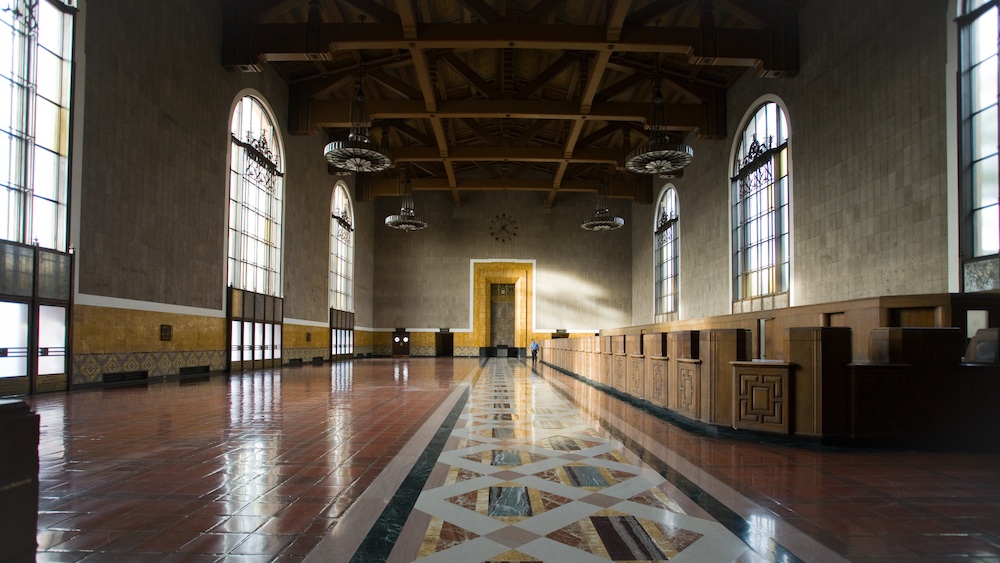
    One Minute Los Angeles is a collaborative project combining field recording and photography. Photographer Lara Bank and recordist Clay Chaplin have been trekking throughout Los Angeles documenting one minute of time in everyday environments. The idea is to capture one minute of sound framed by two photographic time stamps: one at the start of the minute and one at the end. What happens in between is heard in the recording and only framed by the photographs. The result blurs the relationship between the immediate future and the immediate past.

    Photo by Lara Bank from One Minute Los Angeles - Leaving the Park Station.

    Lara Bank is a Los Angeles artist producing conceptual participatory artworks questioning notions of ownership, space, communication, equity, and accomplishment through communal actions. Her projects question where art can happen: Tree and Space, the Portable Forest, Yard; and test the limits of what we think of as an artistic practice, such as conceptual curation in the 100 Person Solo Show and gallery direction and creation with Sea and Space Explorations, LA, a 501(c)(3) non-profit art gallery. Bank received an MFA in Studio Art from Cal Arts in 1998 and an MFA in Painting from the University of Maryland at College Park in 1996.
    Clay Chaplin is a composer, improviser, video artist, and audio engineer from Los Angeles who explores the realms of audio-visual improvisation, sound synthesis, field recording, electronics, and computer processing for creative sonic expression. Clay has worked on many projects involving experimental music, video, audio recording, and interactive computer systems. Clay’s works have been performed internationally including performances at the San Francisco Electronic Music Festival, the Bent Festival, the Pusan International Computer Music Festival, the Deutsche Gesellschaft fur Elektroakustiche Musik (DEGEM) studios, the Studio for Electro-Instrumental Music (STEIM), the New Interfaces for Musical Expression (NIME) conferences, the Center for Contemporary Music at Mills College (CCM), the Lincoln Center Out-of-Doors Festival, and many others. He is currently the Director of the computer music and experimental media studios at the School of Music at CalArts where he teaches in the Experimental Sound Practices program./

    Lara Bank is a Los Angeles artist producing conceptual participatory artworks questioning notions of ownership, space, communication, equity, and accomplishment through communal actions. Her projects question where art can happen: Tree and Space, the Portable Forest, Yard; and test the limits of what we think of as an artistic practice, such as conceptual curation in the 100 Person Solo Show and gallery direction and creation with Sea and Space Explorations, LA, a 501(c)(3) non-profit art gallery. Bank received an MFA in Studio Art from Cal Arts in 1998 and an MFA in Painting from the University of Maryland at College Park in 1996. www.larabank.com/

    Photo by Lara Bank from One Minute Los Angeles - Union Station

    Clay Chaplin is a composer, improviser, video artist, and audio engineer from Los Angeles who explores the realms of audio-visual improvisation, sound synthesis, field recording, electronics, and computer processing for creative sonic expression. Clay has worked on many projects involving experimental music, video, audio recording, and interactive computer systems. Clay’s works have been performed internationally including performances at the San Francisco Electronic Music Festival, the Bent Festival, the Pusan International Computer Music Festival, the Deutsche Gesellschaft fur Elektroakustiche Musik (DEGEM) studios, the Studio for Electro-Instrumental Music (STEIM), the New Interfaces for Musical Expression (NIME) conferences, the Center for Contemporary Music at Mills College (CCM), the Lincoln Center Out-of-Doors Festival, and many others. He is currently the Director of the computer music and experimental media studios at the School of Music at CalArts where he teaches in the Experimental Sound Practices program. http://claychaplin.com/

  • Clay Chaplin

    Side Effects is a series of short audio-visual improvisations that utilize feedback loops where the audio and video signals influence the abstraction of each other creating an infinite palette of performance possibilities.
    Clay Chaplin is a composer, improviser, video artist, and audio engineer from Los Angeles who explores the realms of audio-visual improvisation, sound synthesis, field recording, electronics, and computer processing for creative sonic expression. Clay has worked on many projects involving experimental music, video, audio recording, and interactive computer systems. Clay’s works have been performed internationally including performances at the San Francisco Electronic Music Festival, the Bent Festival, the Pusan International Computer Music Festival, the Deutsche Gesellschaft fur Elektroakustiche Musik (DEGEM) studios, the Studio for Electro-Instrumental Music (STEIM), the New Interfaces for Musical Expression (NIME) conferences, the Center for Contemporary Music at Mills College (CCM), the Lincoln Center Out-of-Doors Festival, and many others. He is currently the Director of the computer music and experimental media studios at the School of Music at CalArts where he teaches in the Experimental Sound Practices program.

    Side Effects is a series of short audio-visual improvisations that utilize feedback loops where the audio and video signals influence the abstraction of each other creating an infinite palette of performance possibilities.

    Screen capture no.1 from Side Effects

    Clay Chaplin is a composer, improviser, video artist, and audio engineer from Los Angeles who explores the realms of audio-visual improvisation, sound synthesis, field recording, electronics, and computer processing for creative sonic expression. Clay has worked on many projects involving experimental music, video, audio recording, and interactive computer systems. Clay’s works have been performed internationally including performances at the San Francisco Electronic Music Festival, the Bent Festival, the Pusan International Computer Music Festival, the Deutsche Gesellschaft fur Elektroakustiche Musik (DEGEM) studios, the Studio for Electro-Instrumental Music (STEIM), the New Interfaces for Musical Expression (NIME) conferences, the Center for Contemporary Music at Mills College (CCM), the Lincoln Center Out-of-Doors Festival, and many others. He is currently the Director of the computer music and experimental media studios at the School of Music at CalArts where he teaches in the Experimental Sound Practices program. http://claychaplin.com/

    Screen capture no.2 from Side Effects
  • Anders Monrad/Simon Bækdahl Nielsen

    ”ERVAX for 2” is an interactive art piece by composer Anders Monrad and Designer Simon Bækdahl Nielsen. We call it both a game and a compositional tool, because even though it looks and plays a bit like an arcade game, part of the point is that the players are creating music. Sort of a Guitar Hero in reverse, where the music does not dictate the gameplay, but instead is generated by playing the game.
    Mechanically, it’s a two-player arcade racing / shoot-em-up, though I should say that in the process of creating this thing, decisions have been made that are not guided solely by conventional game design wisdom, but rather the needs of the compositional framework. That means that in some aspects, it’s a bit of an unfair game and that some details (like, for instance, a clear win condition) have been discarded.
    We hope to get people from the audience to play it through a few times, preferably someone who haven’t touched it before. Later, there will probably be a chance to play it off stage. Next to no gaming experience required. Select from a roster of characters, each with their distinct sound, including:
    Arnold Schönberg (the sombre serialist), Stokastiko (the aleatoric entity),
    XV-32768 (the interstellar robot), Hank Marvin (master of the solid body)
    and Surfer Dude.
    ERVAX for 2” is an interactive art piece by composer Anders Monrad and Designer Simon Bækdahl Nielsen. We call it both a game and a compositional tool, because even though it looks and plays a bit like an arcade game, part of the point is that the players are creating music. Sort of a Guitar Hero in reverse, where the music does not dictate the gameplay, but instead is generated by playing the game.
    Mechanically, it’s a two-player arcade racing / shoot-em-up, though I should say that in the process of creating this thing, decisions have been made that are not guided solely by conventional game design wisdom, but rather the needs of the compositional framework. That means that in some aspects, it’s a bit of an unfair game and that some details (like, for instance, a clear win condition) have been discarded.
    We hope to get people from the audience to play it through a few times, preferably someone who haven’t touched it before. Later, there will probably be a chance to play it off stage. Next to no gaming experience required. Select from a roster of characters, each with their distinct sound, including: Arnold Schönberg (the sombre serialist), Stokastiko (the aleatoric entity), XV-32768 (the interstellar robot), Hank Marvin (master of the solid body) and Surfer Dude.
    Anders Monrad
  • Softday

    “Remediation #4 of Marbh Chrios (Dead Zone)”
    In 2008, Virginia Institute of Marine Science Professor Robert Diaz showed that the number of “dead zones”—areas of seafloor with too little oxygen for most marine life—had increased by a third between 1995 and 2007. Diaz and collaborator Rutger Rosenberg of the University of Gothenburg in Sweden found that dead zones are now “the key stressor on marine ecosystems” and “rank with over-fishing, habitat loss, and harmful algal blooms as global environmental problems.” The study, which appeared in the August 15, 2008 issue of the journal Science, tallied 405 dead zones in coastal waters worldwide, affecting an area of 246,000 km2.
    It is currently estimated that there are 20 such dead zones in Ireland and two contested dead zones were identified in the study at both Killybeg’s Harbour (1999) and Donegal Bay (2000).
    With a number of unique and purpose designed statistical algorithms and heuristics, Softday (Sean Taylor and Mikael Fernström) translated some of the related scientific environmental data into abstract live sonifications and vocalisations. Softday worked collaboratively with three partners: local traditional musicians from An Charraig/Amhainn a’Ghlinne (Cairdeas na bhFidiléirí) in Donegal, Met Éireann (the Irish Meteorological Service) and The Marine Institute of Ireland, to explore the relationship of climate and culture to sound.
    Softday is a collaboration between Sean Taylor and Mikael Fernström that started in 1999, exploring ideas in multimedia art. See http://www.softday.ie/ for details.

    Remediation #4 of Marbh Chrios (Dead Zone)

    In 2008, Virginia Institute of Marine Science Professor Robert Diaz showed that the number of “dead zones”—areas of seafloor with too little oxygen for most marine life—had increased by a third between 1995 and 2007. Diaz and collaborator Rutger Rosenberg of the University of Gothenburg in Sweden found that dead zones are now “the key stressor on marine ecosystems” and “rank with over-fishing, habitat loss, and harmful algal blooms as global environmental problems.” The study, which appeared in the August 15, 2008 issue of the journal Science, tallied 405 dead zones in coastal waters worldwide, affecting an area of 246,000 km2.

    It is currently estimated that there are 20 such dead zones in Ireland and two contested dead zones were identified in the study at both Killybeg’s Harbour (1999) and Donegal Bay (2000).

    With a number of unique and purpose designed statistical algorithms and heuristics, Softday (Sean Taylor and Mikael Fernström) translated some of the related scientific environmental data into abstract live sonifications and vocalisations. Softday worked collaboratively with three partners: local traditional musicians from An Charraig/Amhainn a’Ghlinne (Cairdeas na bhFidiléirí) in Donegal, Met Éireann (the Irish Meteorological Service) and The Marine Institute of Ireland, to explore the relationship of climate and culture to sound.

    Softday

    Softday is a collaboration between Sean Taylor and Mikael Fernström that started in 1999, exploring ideas in multimedia art. www.softday.ie/

  • Bradford Blackburn/Ya-Ju Lin

    tr4nc3f1gur4t10n for dancer, real-time video processing, and electroacoustic music creates a synergy of three different mediums through interactive technology. An amplitude threshold analysis of the audio is used to trigger video processing of an iconic public domain video about the atomic weapon tests at the dawn of the Nuclear Age. Motion sensors worn by the dancer are used to manipulate the processing of the video during the performance. The title of the work refers to society’s changing attitudes and perceptions of nuclear energy and warfare, and the possible consequences.

    Bradford Blackburn (composer, performer) is an Assistant Professor of Music & New Media Production for The University of Tampa, where he teaches electronic music, theory, and composition, as well as directs the recording and music technology programs. His primary compositional interests include microtonal and extended just tuning systems, experimental instrument building, and interactive computer music. His music has been presented in festivals, and radio broadcasts throughout the United States and South America. Blackburn earned a DMA from the University of Illinois, an M.M. from the University of Miami, and a B.M. from the State University of New York at Fredonia.
    Ya-Ju Lin (choreographer) is a dancer and choreographer, originally from Taiwan, whose work includes Modern, Ballet, and Chinese Folk Dance. She has performed professionally with the Chicago Opera, the Metropolitan Opera in New York City, and the Lyric Opera of Chicago. As a choreographer her works have been presented in the United States and Taiwan. She currently teaches choreography, improvisation, and the Alexander Technique at The University of Tampa.

    tr4nc3f1gur4t10n

    Bradford Blackburn (composer, performer) is an Assistant Professor of Music & New Media Production for The University of Tampa, where he teaches electronic music, theory, and composition, as well as directs the recording and music technology programs. His primary compositional interests include microtonal and extended just tuning systems, experimental instrument building, and interactive computer music. His music has been presented in festivals, and radio broadcasts throughout the United States and South America. Blackburn earned a DMA from the University of Illinois, an M.M. from the University of Miami, and a B.M. from the State University of New York at Fredonia. www.bradfordblackburn.com/

    Ya-Ju Lin (choreographer) is a dancer and choreographer, originally from Taiwan, whose work includes Modern, Ballet, and Chinese Folk Dance. She has performed professionally with the Chicago Opera, the Metropolitan Opera in New York City, and the Lyric Opera of Chicago. As a choreographer her works have been presented in the United States and Taiwan. She currently teaches choreography, improvisation, and the Alexander Technique at The University of Tampa.

    tr4nc3f1gur4t10n - Picture 2

  • Timothy Polashek

    Micro-Coastings: Electro-Acoustic Music and Video
    During the recording process of sound sources for “Micro-Coastings“:, I performed and produced rhythms through moving, striking and scraping objects, or I simply captured the natural rhythms of sound sources.  I focused on recording short expressive gestures and using lots of close microphone positioning, sometimes even rapidly moving the microphones during takes.   The video camera, like the microphone during the recording of my sound sources, was likewise positioned to frame objects more closely to capture things expressively.  Using analogous processes to develop the music and video was especially enjoyable for me, as I could apply my musical intuition to video production in making my choices.

    Micro-Coastings

    Electro-Acoustic Music and Video

    During the recording process of sound sources for “Micro-Coastings“:, I performed and produced rhythms through moving, striking and scraping objects, or I simply captured the natural rhythms of sound sources.  I focused on recording short expressive gestures and using lots of close microphone positioning, sometimes even rapidly moving the microphones during takes.   The video camera, like the microphone during the recording of my sound sources, was likewise positioned to frame objects more closely to capture things expressively.  Using analogous processes to develop the music and video was especially enjoyable for me, as I could apply my musical intuition to video production in making my choices.

    Micro-Coastings

    Timothy Polashek writes in a variety of media and styles, including vocal, instrumental, electro-acoustic music, text/sound compositions, and interactive performance systems.  His work can be found on “Wood and Wire”, published by Albany Records, and The Electric Music Collective’s albums “Incandescence” and “Defiant”.  Tim earned his Doctor of Musical Arts in Composition from Columbia University and coordinates the music technology program at Transylvania University in Lexington, Kentucky.

    Timothy Polashek

    www.tdpmusic.com/

  • Michiel Van Bakel

    Spaceship Earth Redox (2011)
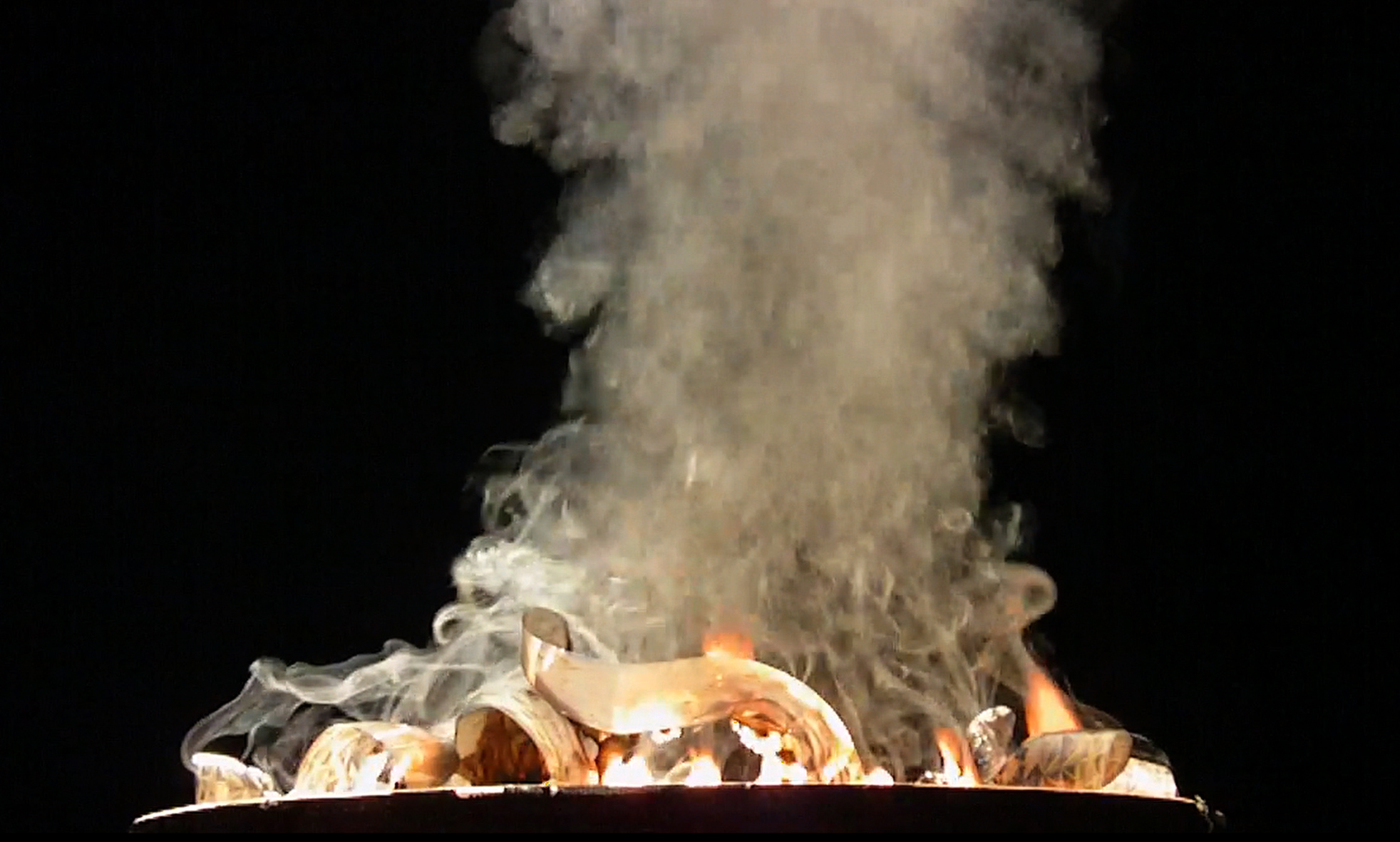
    The extremely slow combustion of utopian models (Spaceship Earth by Buckminster Fuller and Walking City by Archigram) forms a symbolic image and an aesthetic experience: the ineffable beauty of destruction.
    Buckminster Fuller’s Manual for Spaceship Earth embodies thoughtful early environmental activism with the adagium ‘do more with less’ (1968)
    Archigram’s Walking City can be seen as a jubilant notion of consumer choice combined with optimised technology that relies on infinite resources. (1964)

    Spaceship Earth Redox (2011)

    The extremely slow combustion of utopian models (Spaceship Earth by Buckminster Fuller and Walking City by Archigram) forms a symbolic image and an aesthetic experience: the ineffable beauty of destruction.

    Buckminster Fuller’s Manual for Spaceship Earth embodies thoughtful early environmental activism with the adagium ‘do more with less’ (1968)

    Archigram’s Walking City can be seen as a jubilant notion of consumer choice combined with optimised technology that relies on infinite resources. (1964)

    Spaceship Earth Redox

    Michiel Van Bakel (1966, lives and works in Rotterdam, the Netherlands)  makes films and videos as well as sculptures and interactive multi-media-installations. In these he combines the elementary foundations of photography and video with digital animation techniques. While his approach is technical, his work focuses on people in their surroundings, often resulting in a kind of poetic estrangement. www.michielvanbakel.nl/

  • Tom Williams/Vida Midgelow/Tim Halliday


    Voice (a Retracing)
    Composer: Tom Williams
    Video artist/dancer: Vida Midgelow
    Video assistant: Tim Halliday
    VOICE (a Retracing)
    Qualities of live movement are visually re-articulated through the use of moving image and sound. Focusing on notions of memory, (dis)appearance, nomadism and pleasure the video material seeks to capture ‘in the moment’ acts of dancing by movement performer Vida Midgelow, revealing the experiential and embodied nature of solo dance improvisation.
    Voice, the sound score, gives voice to the utterances of a diffused and disparate voice: “listen.. there is nothing… but wait… dear dancer/ dear practice” – “Shifting, sliding, tracing routes, finding pathways” in an effluence of articulations, where fragments of words and ideas tumble, stumble forth.
    The score explores semantic resonances and their qualities of onomatopoeia within the spoken text as well as its complex unfolding into an abstract electroacoustic music discourse where words, sonic space, soundscapes and musical processes collide.

    Voice (a Retracing)

    Composer: Tom Williams, Video artist/dancer: Vida Midgelow, Video assistant: Tim Halliday

    Qualities of live movement are visually re-articulated through the use of moving image and sound. Focusing on notions of memory, (dis)appearance, nomadism and pleasure the video material seeks to capture ‘in the moment’ acts of dancing by movement performer Vida Midgelow, revealing the experiential and embodied nature of solo dance improvisation.

    Voice, the sound score, gives voice to the utterances of a diffused and disparate voice: “listen.. there is nothing… but wait… dear dancer/ dear practice” – “Shifting, sliding, tracing routes, finding pathways” in an effluence of articulations, where fragments of words and ideas tumble, stumble forth.

    The score explores semantic resonances and their qualities of onomatopoeia within the spoken text as well as its complex unfolding into an abstract electroacoustic music discourse where words, sonic space, soundscapes and musical processes collide.

    Voice (a retracing) - screen shot 1

    Tom Williams studied composition at Huddersfield and Keele Universities and completed a doctorate in composition at Boston University. He was runner-up at ALEA III 1993 for his piano and tape piece Ironwork, his acousmatic work Break was a finalist of 2004 Music Viva, and Shelter received an honourable mention in IMEB (Bourge) 2006, and in 2010 his acousmatic work Can won the medal of the Senato della Repubblica Italiana for the “electro-acoustic music” section of the VIII International Contemporary Music Contest “Città di Udine”. His music has received numerous international performances and broadcasts, and he has written for dance, theatre and education. In 2008 a CD featuring his acousmatic work, Taking Shelter was released. Tom Williams is Principal Lecturer and Course Director for the BA in Composition at Coventry University, UK. www.tw-hear.com

    Vida Midgelow is Reader in Dance and Performance Studies, University of  Northampton, UK, and Co- Director of The Choreographic Lab. As a dance artist and scholar she has particular interests in creative processes, improvisation, and the interface between theory and practice. Her book ‘Reworking the Ballet: Counter narratives and alternative bodies’ was published by Routledge in 2007 and she recently completed a US / UK tour of her improvised performance work ‘Trace: Playing with/out memory’ – which she made as part of The Choreographic Lab ‘Articulating Dance’ project.

    Tim Halliday is a performance and video technician at the University of Northampton and a freelance video artist.
    Voice (a retracing) - screen shot 4
  • Björk Viggósdóttir

    exact
    ..2008.. ( Video 8,36 mín) ( Sound 8,36 mín)
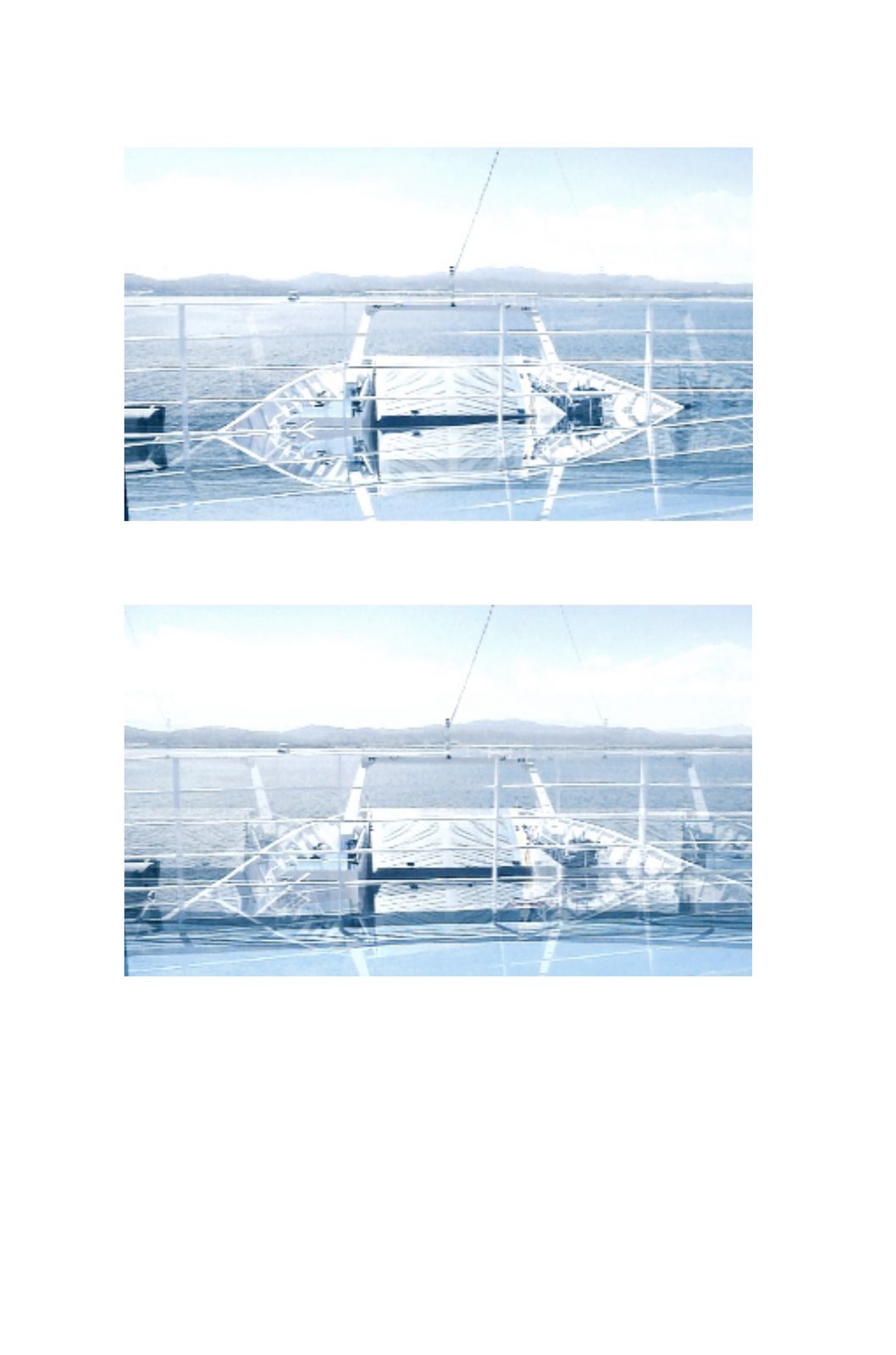
    The work is about exact moment, the moment when you are going reverse and forward at the same time. The beauty and the darkness at the same time.
    When something is about to happen but has not happened yet or you don’t know if it is going to happen.
    The moment on the sea when you are vulnerable surrounded by the sea.
    And no way out.
    The image of mountains and sea is from Greece shoot in my way from the Island of Dreams to Oropus. The Icelander in me looks for the mountains and the sea wherever I go.
    The video is shoot on I still image Leica camera so the frames are fewer than in usual vide recordings. So the process of the editing is unusual and the sequences are layered in many broken forms of the image.
    The sound is produced in Abelton live and I use similar process as used for the vide editing. Where sequences are reversed and forwarded multiplied and time and the beat of the sound and images are corrupted to get the exact moment and the feeling I am looking for. Like earthquake or emotional chaos.
    The contrast between the beauty of the image and the pain and darkness of the sound makes a little story for the viewer to experience the exact moment.

    exact

    The work is about exact moment, the moment when you are going reverse and forward at the same time. The beauty and the darkness at the same time.

    When something is about to happen but has not happened yet or you don’t know if it is going to happen.

    The moment on the sea when you are vulnerable surrounded by the sea.

    And no way out.

    The image of mountains and sea is from Greece shoot in my way from the Island of Dreams to Oropus. The Icelander in me looks for the mountains and the sea wherever I go.

    The video is shoot on I still image Leica camera so the frames are fewer than in usual vide recordings. So the process of the editing is unusual and the sequences are layered in many broken forms of the image.

    The sound is produced in Abelton live and I use similar process as used for the vide editing. Where sequences are reversed and forwarded multiplied and time and the beat of the sound and images are corrupted to get the exact moment and the feeling I am looking for. Like earthquake or emotional chaos.

    The contrast between the beauty of the image and the pain and darkness of the sound makes a little story for the viewer to experience the exact moment.

    Exact

    Björk Viggósdóttir (b.1982) graduated from the Art Academy of Iceland in 2006 and has since produced a number of videos and installations. In her general practice Björk deals with visual images, emotions, sounds and sensations in a similar way to what occurs involuntarily in the mind during certain stages of live, whether in dream or at wake. Björk works with colors, emotions, signs and other things from the everyday, which she brings to other dimensions by creating for them new perspectives and settings. In her art Björk likes to encourage her audience to use all their senses for viewing her work by using combinations of different media in her works. She has exhibited her work across Europe, the United States and in Iceland where she frequently collaborates with composers, musicians, dancers and other artists in both solo and group exhibitions. http://bjorkviggosdottir.wordpress.com/

  • João Pedro Oliveira/Takagi Masakatsu

    Bloomy Girls

    Video by Takagi Masakatsu.
    Music by João Pedro Oliveira
    The soundtrack for the video Bloomy Girls tries to establish a dialog between the music and the image, in both technical and artistic ways.
    Technically, the type of image synthesis and transformations used in the video suggest the use of synthetic sounds (most of them created through the use of granular synthesis techniques, as well as other computer generated sounds). These synthetic sounds are used together with recorded and subsequently transformed female voice sounds, that specifically relate to the suggestions of the images of girls, in the video.

    Video by Takagi Masakatsu, music by João Pedro Oliveira

    The soundtrack for the video Bloomy Girls tries to establish a dialog between the music and the image, in both technical and artistic ways.

    Technically, the type of image synthesis and transformations used in the video suggest the use of synthetic sounds (most of them created through the use of granular synthesis techniques, as well as other computer generated sounds). These synthetic sounds are used together with recorded and subsequently transformed female voice sounds, that specifically relate to the suggestions of the images of girls, in the video.

    Bloomy girls

    João Pedro Oliveira is one of the most prominent Portuguese composers of his generation. He studied organ performance and architecture. From 1985 to 1990 he moved to the US as a Fulbright student, where he completed a PhD in Music at the University of New York at Stony Brook. He has received numerous prizes and awards, including three Prizes at Bourges Electroacoustic Music Competition, the prestigious Magisterium Prize at the same competition, the Giga-Hertz Special Award, 1st Prize in Metamorphoses competition, 1st Prize in Yamaha-Visiones Sonoras Competition, 1st Prize in Musica Nova competition, etc.. His music is played all over the world, and most of his works have been commissioned by Portuguese and foreign groups and foundations. He is Senior Professor at Aveiro University (Portugal) and teaches composition, electroacoustic music and analysis. The music of Bloomy Girls received the 1st Prize at the Roma Soundtrack Competition. www.jpoliveira.com

    Takagi Masakatsu is a visual artist and musician whose work knows no aesthetic borders. He has presented video installations and performed live at art spaces around the world. He also produces music videos, as well as music for commercials and film. He has toured with musician and remix artist David Sylvian. In 2006, “Bloomy Girls,” a visual book with his video arts collection, was released. Res magazine named him one of the 2006 RES 10, an annual selection of emerging artists who will influence the worlds of film, video, design, advertising, music, and media art in the upcoming year and beyond. www.takagimasakatsu.com/
  • Paolo Girol

    POSTRIBOLO: Substitution of original soundtrack of the scene “Le case di Tolleranza” from the movie “Roma” (1972) by F. Fellini with an original soundtrack made up with sounds of coins. The main idea is based on the use of the sound produced by coins: 1 cent, 2, 5, 10, 20, 50 cents of € and 1,2 €.

    Coins were “played” for a training period until it was decided to use 4  categories of sounds:

    • “Ruotii”: coins were kindly thrown onto a wooden surface till they falls;
    • “Sfregolii”: coins ( in a range from 2 to 8 ) are rubbed in the hands;
    • “Splash”: coins are dropped from a height of ~20 cm. inside an aluminum pan (diameter ~22cm., height  ~12 cm.) filled with 2 liters of water;
    • “Percorsi acquosi”: in the same pan filled with 2 liters of water, coins ( in a range from 2 to 8 ) are put under the water surface. The pan is gently shacked, holden by the 2 pan handles, while coins covered the pan bottom.

    The substitution of original soundtrack of the scene with an original one made up with sounds of coins follow up a thorough analysis of the scene (editing, narrative rhythm, characters, cinematography, etc…)

    Paolo Girol

    Paolo Girol (1972, Venice, Italy) studied mandolin and classic guitar with Livio Marcolin and attended master classes with Emanuele Segre and Alvaro Pierri and studied Computer Science with Andrea Sgarro at the University of Trieste. He has got two A. A. degrees: “Sound Engineer” and “Sound Recording Techniques for Musicians”. He obtained his Bachelor Degree in “Music and New Technologies” from Academy of Music of Trieste and his Master Degree in “Audio Visual Composition” from the same institution. His interest is the hybridization of different artistic languages. His works have been played nationally and internationally, they have been selected to several festivals/conferences and they have been awarded with national and international prizes such as First Prize in “Multimedia & Musical Arts” for Best Italian Digital Composition in Musical Field 2006 and First Prize “Work for multimedia”, International Competition of Electroacoustic Music and Sonic Art 2005, IMEB, Bourges, France. He teaches “Sound Recording” at the Baltic Film School and “Fundamentals of AudioVisual art” at the Estonian Academy of Music. http://paologirol.com/

    About the piece POSTRIBOLO: Substitution of original soundtrack of the scene “Le case di Tolleranza” from the movie “Roma” (1972) by F. Fellini with an original soundtrack made up with sounds of coins. The main idea is based on the use of the sound produced by coins: 1 cent, 2, 5, 10, 20, 50 cents of € and 1,2 €.
    Coins were “played” for a training period until it was decided to use 4
    categories of sounds:
    • “Ruotii”: coins were kindly thrown onto a wooden surface till they falls;
    • “Sfregolii”: coins (in a range from 2 to 8) are rubbed in the hands;
    • “Splash”: coins are dropped from a height of ~20 cm. inside an aluminum pan (diameter ~22cm., height
    ~12 cm.) filled with 2 liters of water;
    • “Percorsi acquosi”: in the same pan filled with 2 liters of water, coins (in a range from 2 to 8) are put under the water surface. The pan is gently shacked, holden by the 2 pan handles, while coins covered the pan bottom.
    The substitution of original soundtrack of the scene with an original one made up with sounds of coins follow up a thorough analysis of the scene (editing, narrative rhythm, characters, cinematography, etc…
  • Julius Bucsis

    A Journey beyond the Event Horizon

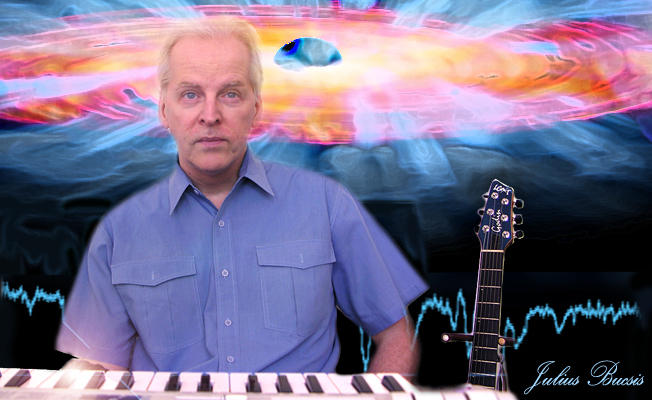
    Current scientific understanding posits the existence of black holes throughout the universe. However, it is not completely clear what takes place beyond the event horizon of these objects. This piece is an interactive aural voyage into the unknown. The participant manipulates the user interface and thereby determines the outcome of the piece.

    Julius Bucsis promo

    Julius Bucsis is a composer, music producer, guitarist and guitar teacher. He has performed extensively in many styles including jazz, rock, and improvisational music. His compositions cover a broad range of categories including jazz, contemporary classical, and electronic music. Several of his acoustic pieces have been performed by the Relache Ensemble and he has also released two CD’s of all original electric guitar oriented instrumental music.

  • Jean-Pierre Mot

    Via Lactea

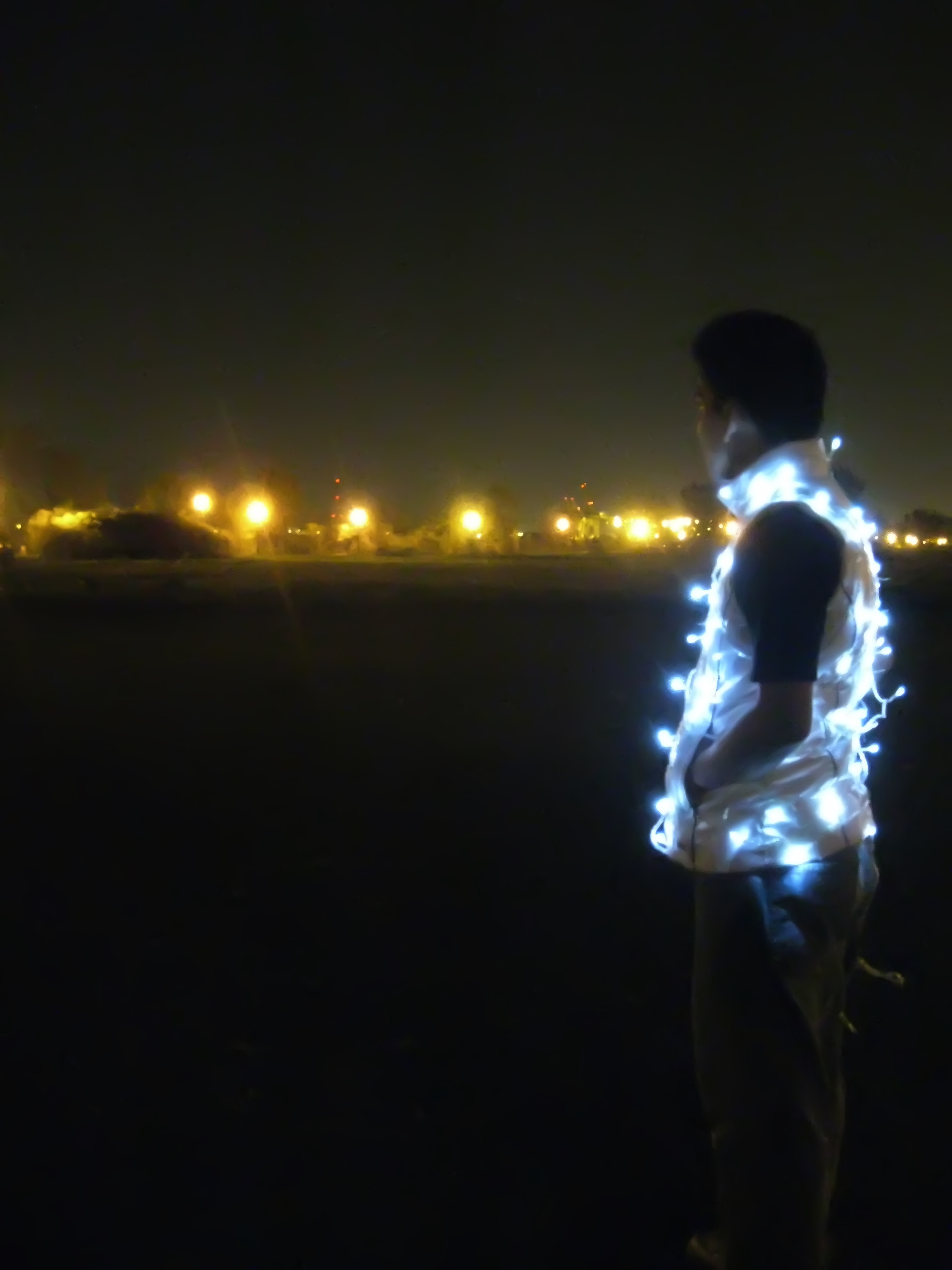
    It has been said, through folkloric stories and legends,  that  making a wish upon a shooting star makes the wish comes true.

    This is why I decided to become a shooting star to help others in their luck, through a performance, by wearing Christmas lights and running in front of a projection of a port at night. Using the lights emanating from the dock as a metaphor of the galaxy, I invite by passers to make their wish as a I run, engulfed in a trail of lights, in front of them. It is through that performance that I hope to bring good fortunes to the spectators by embodying a shooting star.

    Via Lactea

    Jean-Pierre Mot, born in Montreal in 1982, is an artist base in Montreal. He has received a B.F.A. in visual and media art in 2009 from the University of Quebec in Montreal (UQÀM) and will complete a master (M.A.) degree in communication in the summer 2011 at the same university. His master thesis is on the epistemic imaginary and transcend from the works of the French philosopher Gilbert Durand. His researches, either artistic or as a theorist, question the notion of identity through the relationship between the physical body and his tacit imprint on common object and familiar surrounding through mythologies, folkloric stories and legends. http://unmot.carbonmade.com/

    It has been said, through folkloric stories and legends,  that  making a wish upon a shooting star makes the wish comes true.
    This is why I decided to become a shooting star to help others in their luck, through a performance, by wearing Christmas lights and running in front of a projection of a port at night. Using the lights emanating from the dock as a metaphor of the galaxy, I invite by passers to make their wish as a I run, engulfed in a trail of lights, in front of them. It is through that performance that I hope to bring good fortunes to the spectators by embodying a shooting star.
  • David Strang

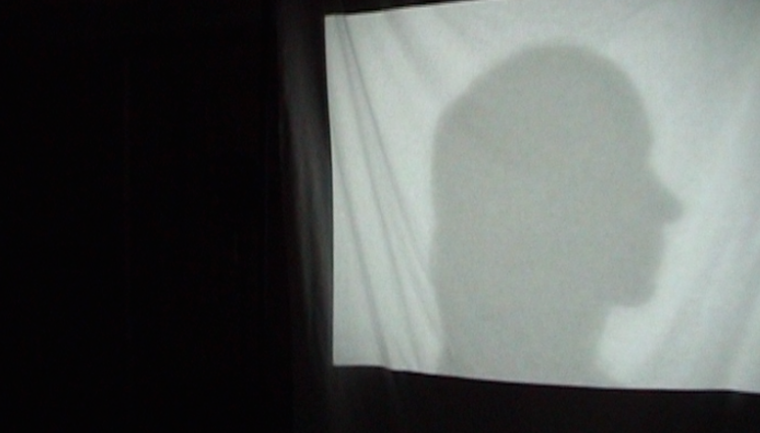
    Phase vox is an interactive installation of sound and image manipulated by natural elements. The silhouette of an individual’s face (in profile) is projected onto a loosely hanging white sheet in the gallery. The sheet is installed either outside or by open doors/windows to allow the flow and movement of air to hit the screen and cause ripples and waves to flow across the image. The movement of the screen is captured through a camera and motion detection and the data is used to manipulate the audio of the voice. As people move throughout the space they naturally affect the flow of air in the space. As more people add their videos (captured as part of the installation) then the anomalies of the human voice are played with and exposed as slowly each video repeats the affected audio is captured and played back into the system to be affected by the elements again.

    Phase vox

    David Strang is an artist who works with sound and interactive elements.His work looks closely at the natural surroundings we live in and amplifes certain aspects to heighten our perception of space/place. Recent work includes site-specifc installation, feld-recording, networks, re-appropriating media objects, hacking and noise. He has collaborated and exhibited with visual artists and scientists as well as exhibiting solo work in the UK, Europe, Russia and USA.He currently lives and works in the UK. www.davidstrang.co.uk

  • Clarence Barlow

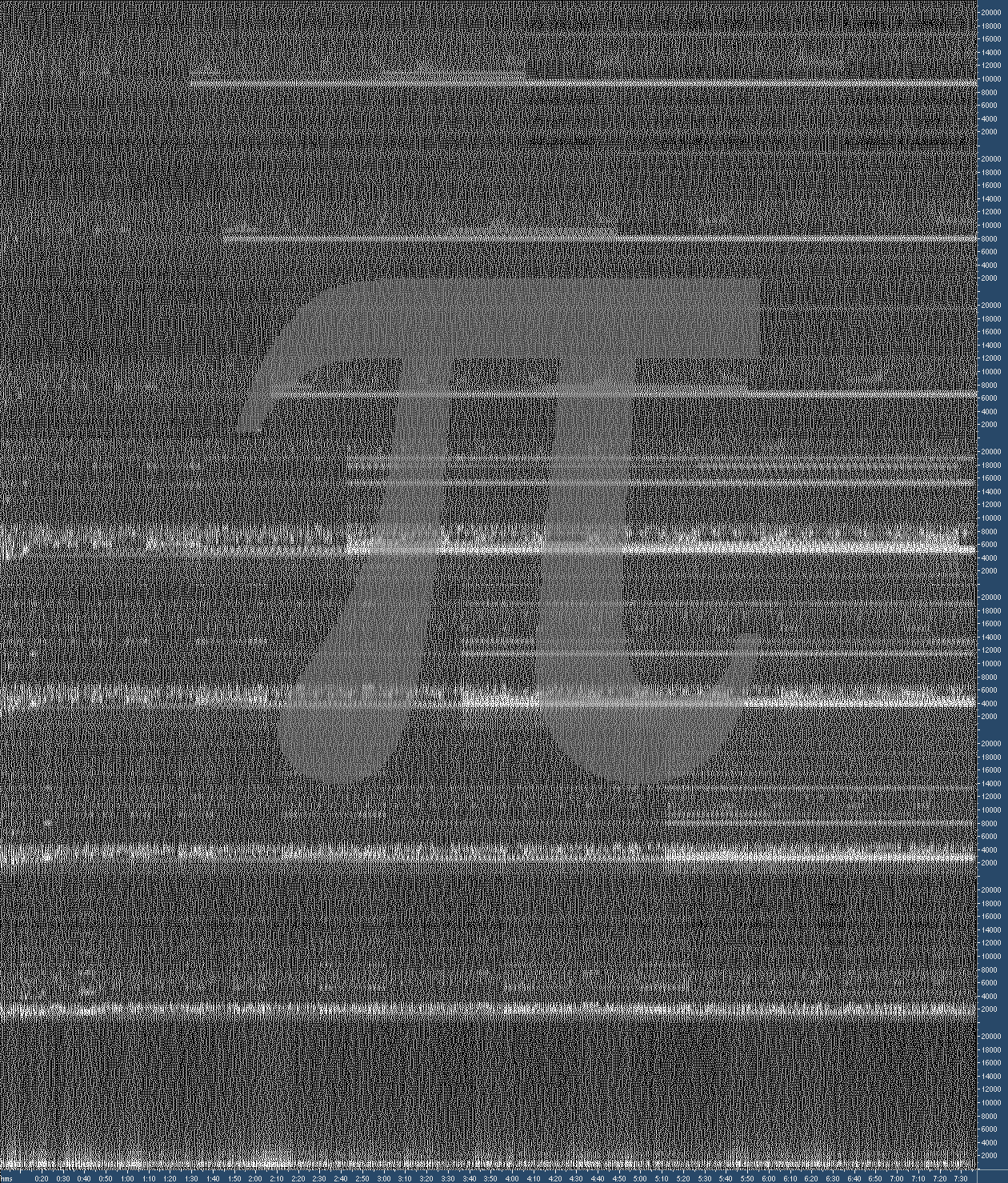
    Approximating π (2007)

    A Sound Installation

    Construction Method

    Point of departure: the converging series π = 4 – 4/3 + 4/5 – 4/7 + 4/9 ∙∙∙

    Each convergence gets a time window of 5040 samples (double the LCM of the numbers 1 to 10), in which ten square wave partials of frequencies 8¾n Hz and amplitude 2^dn are set up, ‘8¾’ deriving from the 5040 samples, ‘n’ being the partial number and ‘dn’ the nth digit in the convergence’s decimal representation; e.g. for ‘3.141592654’, the ten partials’ amplitudes are 23, 21, 24, 21 ,25, 29 etc., thereafter rescaled by the arbitrary sawtooth spectral factor 2π/n, where ‘n’ is still the partial number. The convergences make the digits stabilize from left to right to a value approaching π, the resultant timbre moving from turbulence to constancy over 4 x 109 x 5040 = 20.16 x 10¹² samples or ~14½ years. The installation can be pitch-transposed (by sample dropping) and/or time-truncated. Here the eight sound channels are transposed from 8¾ Hz to frequencies 9, 28, 50, 72, 96, 123, 149 and 175 times higher (= [9 x π(1+½+⅓+ ∙∙ +⅟χ))], χ being the channel number plus one); the duration is truncated to a millionth of the total, i.e. 7′ 37″, the highest transposition thereby reaching the 700,000th approximation of π, where the first six digits are already stable.

    pi8chbwgr

    Clarence Barlow (1945): born into the English-speaking minority of Calcutta, going there to school and college, studying piano, music theory and natural sciences. 1957: first compositions. 1965: graduated in science at Calcutta University, thereafter active as conductor and music theory teacher at the Calcutta School of Music. 1968: moved to Cologne, studying (until 1973) composition and electronic music at Cologne Music University. 1971-1972: studied also at the Institute of Sonology, Utrecht University. 1971: began to use computers as a compositional aid. 1982: initiated, 1986 co-founded, 1986-1993 and 1996-2002 chaired GIMIK: Initiative Musik und Informatik Köln. 1982-1994: in charge of Computer Music at the Darmstadt Summer Courses for New Music. 1984-2005: lecturer on Computer Music, Cologne Music University. 1988: Director of Music, XIVth International Computer Music Conference, held in Cologne. 1990-1991: visiting professor of composition, Folkwang University Essen. 1990-94: Artistic Director, Institute of Sonology, Royal Conservatory, The Hague. 1994-2006: Professor of Composition and Sonology at the same conservatory. 1994-2010: member of the Académie Internationale de Musique Electroacoustique in Bourges. 2005-2006: visiting professor of composition, School of Music and Performing Arts ESMAE in Porto. Since 2006: Corwin Professor and Head of Composition, Music Department, University of California Santa Barbara; concurrently also Affiliate Professor, Media Arts and Technology as well as College of Creative Studies, UCSB. www.rlow.org/

    Approximating π (2007)
    A Sound Installation
    Construction Method
    Point of departure: the converging series π = 4 – 4/3 + 4/5 – 4/7 + 4/9 ∙∙∙
    Each convergence gets a time window of 5040 samples (double the LCM of the numbers 1 to 10), in which ten square wave partials of frequencies 8¾n Hz and amplitude 2^dn are set up, ‘8¾’ deriving from the 5040 samples, ‘n’ being the partial number and ‘dn’ the nth digit in the convergence’s decimal representation; e.g. for ‘3.141592654’, the ten partials’ amplitudes are 23, 21, 24, 21 ,25, 29 etc., thereafter rescaled by the arbitrary sawtooth spectral factor 2π/n, where ‘n’ is still the partial number. The convergences make the digits stabilize from left to right to a value approaching π, the resultant timbre moving from turbulence to constancy over 4 x 109 x 5040 = 20.16 x 10¹² samples or ~14½ years. The installation can be pitch-transposed (by sample dropping) and/or time-truncated. Here the eight sound channels are transposed from 8¾ Hz to frequencies 9, 28, 50, 72, 96, 123, 149 and 175 times higher (= [9 x π(1+½+⅓+ ∙∙ +⅟χ))], χ being the channel number plus one); the duration is truncated to a millionth of the total, i.e. 7′ 37″, the highest transposition thereby reaching the 700,000th approximation of π, where the first six digits are already stable.